
2026 Best UV Coating Curing Machine for Buyers?

Choosing the best Uv Coating Curing Machine in 2026 is not just a matter of buying the lamp with the highest rated power. Buyers need to match wavelength, irradiance, conveyor speed, coating chemistry, and part geometry. A glossy panel may cure evenly under a broad, well-calibrated source; a recessed edge can remain tacky when light does not reach it. Small details matter.

Industry reports offer useful context, but their figures should be read carefully. MarketsandMarkets’ UV Curing System Market report tracks adoption across applications and equipment types, while RadTech’s industry publications discuss UV/EB technology trends and practical process considerations. Neither report, by itself, can confirm that a particular machine will cure a buyer’s coating. Request test data for the actual formulation, substrate, and production speed. Verify how the supplier measures UV output, and ask for repeatability results—not only a successful demonstration.

A caution on expert attribution: without a verifiable interview or published quotation, assigning a direct quote to a named UV-curing specialist would be misleading. This guide therefore treats expert claims as claims to check, not borrowed authority. There is no universal winner. A machine that performs well on flat cartons may disappoint on thick, contoured components. Buyers should compare documented cure performance, operating costs, maintenance access, and supplier support before making a decision. One missed detail can be expensive.
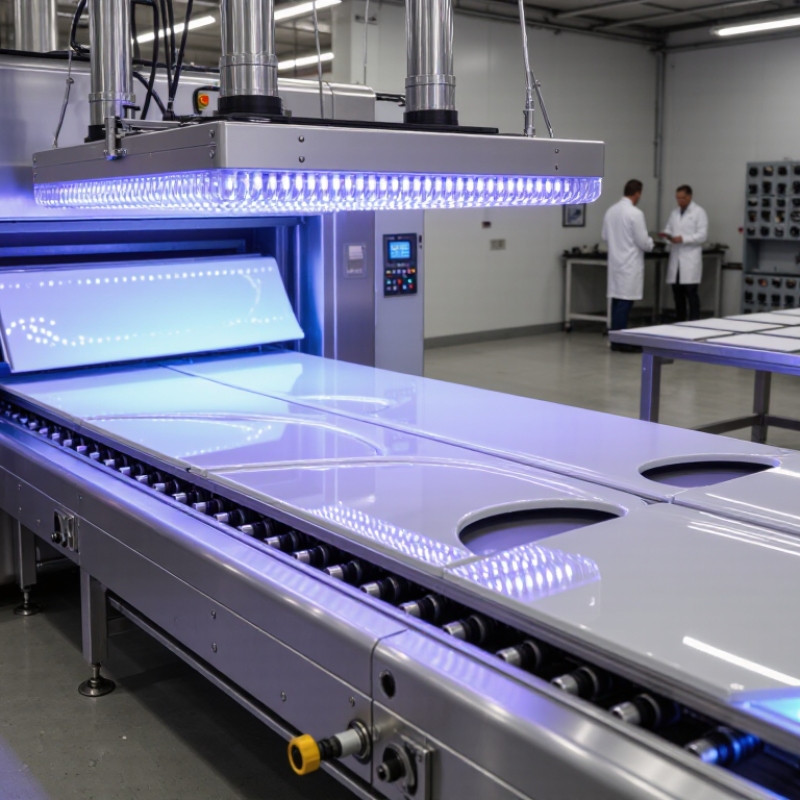
2026 Best UV Coating Curing Machine for Buyers?

Understanding UV Coating Curing Machines and How They Work

A UV coating curing machine hardens a liquid coating by exposing it to ultraviolet energy. The coating contains photoinitiators, which react when they absorb suitable UV wavelengths. This reaction links small molecules into a solid polymer film. The result can be a dry, glossy surface in seconds. Often, yes.

A typical line includes a conveyor, UV source, reflector, cooling system, and controls for speed and output. As a coated sheet or part passes beneath the lamp, UV energy reaches the wet layer. The required exposure depends on coating chemistry, film thickness, color, and substrate. A dark or heavily pigmented coating may need more energy than a clear one. Operators should verify curing with the coating supplier’s specifications and practical tests, such as checking surface tack and adhesion.

Lamp type matters. LED systems produce specific wavelength bands and usually need less warm-up time; conventional arc lamps emit broader UV output and create more heat. Neither option suits every coating. Match the source to the photoinitiator, then confirm the result on the actual material. Measure conveyor speed and UV intensity, not just lamp power. Small changes can leave a film soft beneath a hard surface. That detail is easy to miss. Proper shielding and ventilation also matter, since direct UV exposure and coating fumes can pose workplace hazards. The machine may look simple. Process control is not.

UV Coating Curing: Wavelength and Photon Energy

UV LED curing systems commonly use wavelengths such as 365, 385, 395, and 405 nm. Shorter wavelengths carry more energy per photon, as shown here. The best wavelength for a coating depends on its photoinitiator and the machine’s irradiance, exposure time, and working distance; photon energy alone does not determine curing performance.

Key Types of UV Curing Machines for Different Applications

UV coating curing machines differ in how they deliver light and handle parts. Conveyor systems suit steady production: coated panels pass beneath lamps at a controlled speed, making them useful for flooring, furniture, and printed sheets. Lamp height and belt speed matter. A small adjustment can leave edges tacky or overheat thin material.

Spot and benchtop units target small areas, prototypes, and repair work. They can cure a narrow coating without exposing an entire assembly. For irregular parts, a chamber-style machine offers more even exposure from several directions. It is often a practical choice for molded components or batches of small items. Still, crowded loading can create shadows.

LED UV machines produce light within a selected wavelength range and may use less heat than traditional mercury lamps. They work well when the coating is formulated for that output. Check the coating supplier’s wavelength and dose requirements; “UV compatible” is not enough detail.

A handheld unit can reach awkward corners, but distance and exposure time are harder to keep consistent. That part is easy to underestimate.

Before choosing, test the actual coating on the actual substrate. Look for a dry surface, but also check adhesion and cure depth. A glossy finish can hide incomplete curing underneath. Production speed matters, of course, yet a slower, verified process may prevent costly rework. Sometimes the best machine is simply the one operators can set and repeat reliably.

Factors to Compare When Choosing a UV Curing Machine in 2026

Choosing a UV coating curing machine in 2026 starts with the coating, not the catalog. Check the coating supplier’s recommended wavelength and required energy dose. A lamp that looks powerful may still cure poorly if its output does not match the chemistry. Ask for measured irradiance and dose at the working distance, not just electrical power. Small details matter. A test strip can reveal tacky edges or uneven gloss before a full production run.

Compare the usable curing width with your widest regular job, then consider line speed and adjustment range. If operators handle different substrates, variable power and conveyor speed can help prevent overheating or incomplete curing. Inspect cooling airflow, lamp replacement access, shielding, and emergency stops. These affect daily work, not just installation day. Request a trial using your actual coating and substrate, and record the settings that produce a consistent result. I have learned that one successful sample does not prove a machine will perform equally well across a whole shift. Leave room for that uncertainty. Check service availability, spare-part lead times, and training before comparing total cost. A lower purchase price may not be the better fit.

2026 Best UV Coating Curing Machine for Buyers? - Factors to Compare When Choosing a UV Curing Machine in 2026

Comparison factor Conventional mercury UV UV LED What buyers should check
Suitable applications Established processes requiring broad-spectrum UV output, including some coatings, inks, and adhesives. Processes formulated for specific UV LED wavelengths, commonly including printing, coating, and adhesive applications. Confirm that the coating or ink is designed to cure at the machine’s wavelength and that the complete process has been tested.
Typical emission range Broad-spectrum output; the emitted spectrum depends on lamp type and system configuration. Usually concentrated around a specified wavelength, often in the 365–405 nm range. Compare the material’s photoinitiator response with the machine’s measured spectral output; do not select by wavelength label alone.
Warm-up and switching May require warm-up and cooldown procedures; frequent switching can affect operating efficiency and lamp life. Typically switches on and off rapidly and can be controlled on demand. Consider shift patterns, pauses, start-up frequency, and whether production benefits from instant switching.
Heat management Can transfer more heat to the work area; reflectors and ventilation may be needed. Generally produces less infrared radiation at the substrate, but the LED assembly still requires effective heat removal. Check substrate temperature limits, cooling requirements, airflow, and performance in the intended production environment.
Energy use Energy consumption depends on lamp power, operating hours, reflectors, and process settings. Can reduce energy use in suitable applications through targeted output and on-demand operation. Request measured electrical input and curing results at the required line speed; compare total operating cost, not lamp wattage alone.
Maintenance and consumables Lamps and reflectors may need periodic replacement or cleaning; maintenance intervals vary by system and use. Often has fewer routine lamp replacements, though cooling components and optical surfaces still require inspection. Ask for documented maintenance intervals, replacement-part availability, and service requirements.
Curing performance May suit formulations that respond to its broad spectrum, subject to irradiance, exposure time, and material thickness. Can deliver effective curing when wavelength, irradiance, dose, and formulation are properly matched. Request a production-representative trial and verify cure quality using suitable tests for the coating or ink.
Integration and process control Available in conveyor, press, and other configurations; controls depend on the machine design. Available in conveyor, press, and inline configurations, often with adjustable output and control interfaces. Check working width, line speed, installation space, electrical supply, interlocks, and compatibility with existing equipment.
Safety requirements UV radiation and hot surfaces require suitable guarding, shielding, and operating procedures. UV exposure remains a hazard even when the source appears less bright; shielding and interlocks are still necessary. Review the machine’s risk assessment, enclosure design, warning labels, and applicable workplace safety requirements.
Best-fit decision Consider when existing materials and validated processes depend on broad-spectrum lamps. Consider when compatible formulations, frequent switching, reduced heat transfer, or lower routine lamp maintenance are priorities. Base the choice on validated curing results, lifecycle costs, safety, service support, and production requirements.

Figures and outcomes vary by machine design, formulation, substrate, and operating conditions. Confirm specifications and curing performance with the equipment supplier and material manufacturer before purchase.

How to Assess Performance, Safety, and Operating Costs

2026 Best UV Coating Curing Machine for Buyers?

A UV curing machine should match your coating, substrate, and production speed. Ask for test results using your own materials, not just a standard sample. Check whether curing is even across the full working width. A glossy surface can still hide tacky spots or weak adhesion. Measure output at several points, and repeat tests after the lamp has warmed up. Small differences matter.

Safety and operating costs deserve equal attention. Look for enclosed light paths, functioning interlocks, and clear maintenance instructions. Ask how operators should handle lamp replacement and cleaning. Compare energy use, expected lamp life, cooling requirements, and spare-part availability. A lower purchase price may not mean a lower cost over several years. Still, published estimates are only estimates; real costs depend on workload and maintenance habits.

Tips: Run a timed production trial with your usual coating. Record curing speed, surface quality, and energy use. Check the machine’s temperature near the exit, too. If results vary, pause and investigate before increasing line speed. Buyers sometimes focus too much on peak output. That is understandable, but steady, repeatable curing is often more useful.

Matching a UV Curing Machine to Your Production Requirements

A UV coating curing machine should fit the work, not just the available floor space. Start with the coating chemistry, substrate, and target line speed. A narrow sheet of coated paper may cure evenly under one setup, while a wide panel can leave shadowed edges. Measure the actual working width, including any planned product changes. Check lamp type, usable curing area, and conveyor speed together. A powerful lamp alone does not guarantee a reliable finish.

Run trials using your real materials. Record the line speed, lamp distance, and surface temperature, then inspect adhesion, gloss, and tack after curing. Keep notes. Small changes in coating thickness can affect the result. For heat-sensitive plastics, ask for temperature-control options and test a sample before specifying production settings. Check how often lamps or other wear parts need replacement, and whether operators can access them safely. A tidy specification sheet can still mislead. I have seen buyers focus on maximum output, then discover that their normal batch sizes need frequent adjustments. That is fixable, but it costs time. Choose a machine that handles your typical run consistently, with enough adjustment for the jobs you actually expect.

Subscribe To Our Newsletter

Join our mailing list to receive the latest news and updates from our team.

You have Successfully Subscribed!