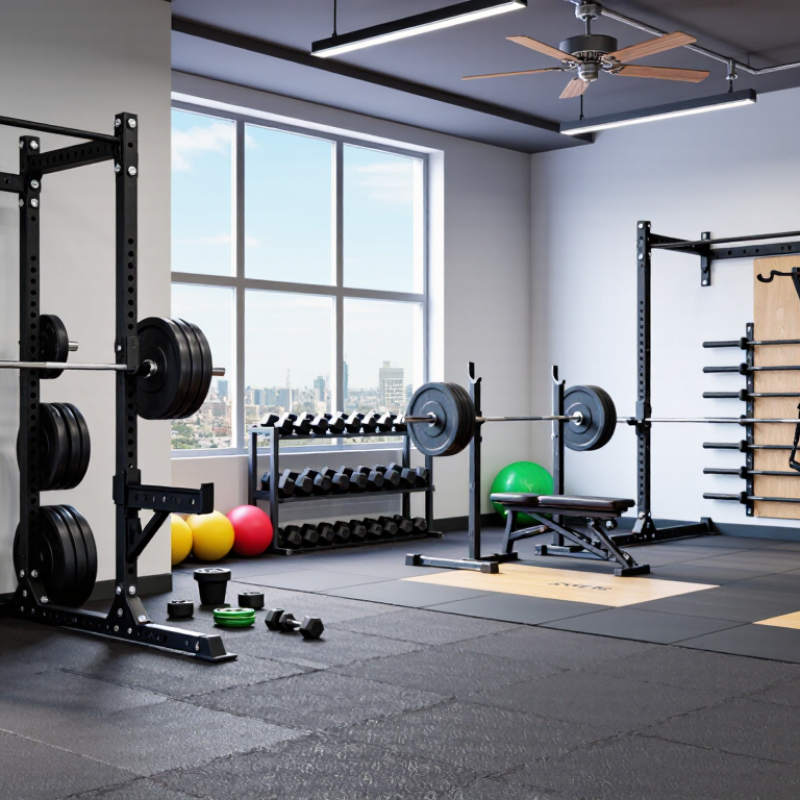
2026 Top Racks and Rigs Buying Guide for Global Buyers?

Buying a rack is not simply choosing steel, color, and a popular brand. It is a long-term decision about safety, training volume, space, maintenance, and support.

The ACSM Worldwide Survey of Fitness Trends consistently places strength-focused training among the most influential fitness directions. That finding matters for commercial gyms, studios, schools, and serious home facilities. Meanwhile, the Health & Fitness Association’s global industry reports show a market that is becoming more professional, connected, and service-driven. Buyers now expect durable equipment, clearer specifications, and reliable after-sales support.

This 2026 guide evaluates the leading Racks & Rigs for global buyers. It considers structural design, rated capacity, pull-up height, storage options, cable compatibility, and anchoring requirements. A compact wall-mounted rig may suit a studio with limited floor space. A six-post power rack may work better in a high-volume strength facility. Details matter.

Check the floor first.

Buyers should also review ISO 20957 guidance, regional installation rules, and the manufacturer’s testing documentation. Product claims can sound impressive, yet vague load ratings remain a warning sign. A rack rated for static weight may not perform equally during repeated kipping movements or dropped-bar training.

This comparison is based on manufacturer information, industry reports, practical buying considerations, and visible product differences. No ranking is flawless. Some brands provide excellent frames but weaker spare-parts support. Others offer strong service but limited customization. Global purchasing also introduces shipping delays, import costs, and regional warranty limitations. Those realities deserve attention before any order is placed.

2026 Top Racks and Rigs Buying Guide for Global Buyers?

Classify the 2026 Top Racks and Rigs by Training Use and Footprint

Choosing racks and rigs in 2026 starts with training use, not appearance. A power rack suits squats, presses, and barbell safety work. A half rack offers similar access with a smaller footprint. Functional rigs support pull-ups, suspension tools, and group training. Cable-focused rigs help users perform controlled pulls, rows, and rehabilitation movements.

Measure the room before comparing specifications. A compact rack may need only a two-meter width, but users still require clearance behind the bar. Check ceiling height carefully, especially for pull-up bars and overhead attachments. Small studios benefit from wall-mounted rigs, while larger facilities can use modular bays. Leave clear walking paths around every station. Crowded layouts slow training and create avoidable contact risks.

Footprint affects more than floor space. A wider base can improve stability, yet it may reduce usable training lanes. Bolted equipment usually needs a suitable floor and careful installation. Freestanding units may be easier to reposition, but they can move during demanding sessions. I once underestimated plate storage space; the rack fit, but the surrounding area did not. That mistake remains useful. Buyers should review load ratings, adjustment points, protective finishes, and maintenance access. Local installers can verify anchoring conditions and user clearances. Specifications help, but real movement patterns decide whether a rack works.

Prioritize Strength Equipment Using ACSM’s 2025 Fitness Trends Survey

ACSM’s 2025 Worldwide Survey of Fitness Trends ranks traditional strength training fifth globally. That ranking matters for buyers planning racks and rigs in 2026. Strength equipment remains practical, measurable, and adaptable across commercial gyms, studios, schools, and training facilities. Choose frames with tested steel, stable feet, secure adjustment points, and clear load ratings. A rack should feel steady during heavy squats, not merely look impressive under bright lighting.

The same ACSM survey places wearable technology first and data-driven technology ninth. This supports equipment that can work with performance tracking, coaching software, and simple training records. However, digital features cannot replace safe hardware. The World Health Organization’s Guidelines on Physical Activity and Sedentary Behaviour recommend muscle-strengthening activities on at least two days weekly for adults. Buyers should therefore assess usable capacity, attachment options, spacing, and maintenance access before reviewing optional technology.

In real purchasing work, small details often decide long-term value. Check weld consistency, bolt access, cable movement, and floor compatibility. Ask for independent test documents when available. I would not assume a larger frame always serves more users. Oversized structures can reduce walking space and complicate supervision. That is easy to miss.

ACSM also places exercise programs for older adults third, encouraging buyers to consider accessible strength stations. Lower step heights, readable markings, adjustable supports, and controlled resistance can improve usability. Specifications still need local verification. Online photographs cannot reveal vibration, noise, or assembly difficulty. These gaps deserve honest attention before a global order is approved.

Size Capacity with WHO’s 150–300-Minute Weekly Activity Benchmark

When selecting racks and rigs for 2026, global buyers should begin with user volume, not steel thickness alone. The World Health Organization recommends 150–300 minutes of moderate activity weekly for adults, alongside muscle-strengthening work. This benchmark helps estimate real equipment demand.

A facility with 40 active members may generate 6,000–12,000 weekly activity minutes. However, not every minute requires a rack. If one strength session lasts 30 minutes, four compact stations could support 80 station-hours weekly, assuming balanced scheduling. That calculation is practical, but imperfect. Peak-hour congestion can still appear.

Look for adjustable rack heights, clear training lanes, and documented load capacity. A 1,000-kilogram rated frame may not suit a crowded room if each station serves several users. Check floor loading, ceiling height, attachment spacing, and local installation requirements. The American College of Sports Medicine’s 2025 Worldwide Survey of Fitness Trends keeps strength training among the leading global trends, supporting continued demand for versatile resistance areas. Yet survey popularity does not guarantee profitable utilization.

For smaller facilities, a six-post structure with pull-up points, storage, and cable-compatible space can reduce duplicated equipment. For larger sites, separate lifting zones may improve traffic flow and supervision. Leave room for failed assumptions. Member behavior changes. Weather, work schedules, and coaching availability can shift weekly usage far beyond the original spreadsheet. Reliable buying decisions combine WHO activity targets, ACSM trend data, observed peak demand, and a safety margin.

2026 Top Racks and Rigs Buying Guide for Global Buyers — Size, Capacity and WHO’s 150–300-Minute Weekly Activity Benchmark
Equipment Type Typical External Size
(W × D × H)
Recommended Clear-Ceiling Height Typical Rated Training Load Primary Training Function Space and Installation Considerations Fit with Weekly Activity Planning
Strength Racks, Rigs and Supporting Equipment
Full Power Rack 1.2–1.5 m × 1.2–1.6 m × 2.1–2.4 m
(47–59 in × 47–63 in × 83–94 in)
2.4–2.7 m
(8–9 ft)
180–450 kg
(400–1,000 lb)
Barbell squats, bench pressing, overhead pressing, pull-ups and rack-based accessory work. Requires a stable, level floor. A minimum of 0.9 m (3 ft) of access space is advisable around the main working sides. Secure anchoring is recommended for high-load or kipping use. Best for 2+ strength days
Supports the resistance-training component recommended alongside aerobic activity.
Half Rack 1.2–1.5 m × 1.0–1.4 m × 2.1–2.4 m
(47–59 in × 39–55 in × 83–94 in)
2.4–2.7 m
(8–9 ft)
180–360 kg
(400–800 lb)
Squats, presses, Olympic-lifting variations and pull-up work with a smaller footprint than a full rack. Needs rear clearance and a secure base. It is generally easier to place in a home gym or compact training studio. Efficient strength option
Suitable for short 30–45-minute sessions performed at least twice weekly.
Wall-Mounted Rig 1.2–1.5 m projection × 2.4–3.6 m width × 2.1–2.7 m height
(47–59 in × 94–142 in × 83–106 in)
2.7–3.0 m
(9–10 ft)
180–450 kg per rack bay
(400–1,000 lb)
Pull-ups, squats, presses, suspension training, rings and multi-user functional training. Must be fixed to a structurally suitable wall or floor system. Check wall type, fastener specification, floor loading and emergency access before installation. High-density facility choice
Useful where several users share equipment during scheduled weekly sessions.
Freestanding Multi-Bay Rig 2.0–3.0 m × 2.0–3.0 m × 2.4–3.6 m
(79–118 in × 79–118 in × 94–142 in)
2.7–3.6 m
(9–12 ft)
180–450 kg per station
(400–1,000 lb)
Group pull-ups, barbell training, rope work, rings, sled preparation and circuit-based strength sessions. Requires a larger safety zone and a level floor. Allow at least 1.2–1.5 m (4–5 ft) of clear space around high-traffic training areas. Suitable for group circuits
Can combine resistance stations with moderate-intensity conditioning blocks.
Squat Stand 1.1–1.3 m × 0.8–1.0 m × 1.5–2.4 m
(43–51 in × 31–39 in × 59–94 in)
2.4–2.7 m
(8–9 ft)
135–270 kg
(300–600 lb)
Squats, overhead presses, front squats and basic barbell strength training. Use on a non-slip surface with adequate side clearance. A spotter system or safety arms improve protection during unsupervised training. Compact strength option
Appropriate for users prioritizing two or more weekly resistance sessions.
Functional Cable Trainer 1.2–1.8 m × 0.8–1.2 m × 2.1–2.4 m
(47–71 in × 31–47 in × 83–94 in)
2.4–2.7 m
(8–9 ft)
Two stacks of 45–90 kg each
(100–200 lb each)
Adjustable cable resistance for rows, presses, rotations, pulldowns, rehabilitation and full-body accessory work. Allow cable travel and user movement space of at least 1.2 m (4 ft) in front of each working side. Confirm whether the unit requires floor anchoring. Versatile full-body training
Supports moderate-volume sessions for different ability levels without repeated barbell loading.
Lifting Platform 2.4 m × 1.8–2.4 m
(8 ft × 6–8 ft)
Matched to rack height Based on floor and equipment specification Deadlifts, Olympic lifts, power movements and controlled barbell dropping where permitted. Use shock-absorbing rubber or a purpose-built platform. Check floor structure, noise transmission, ventilation and local building rules. Protective foundation
Improves setup safety but does not itself provide aerobic activity.
Plate and Bar Storage Rack 0.6–1.2 m × 0.5–0.8 m × 1.0–1.5 m
(24–47 in × 20–31 in × 39–59 in)
Not applicable 135–450 kg
(300–1,000 lb)
Organized storage for Olympic plates, change plates, bars and small accessories. Place outside the lifting and walking path. Distribute plates evenly and verify the storage rack’s total load rating rather than relying only on individual peg ratings. Safety and workflow support
Reduces trip hazards and improves transition time between exercises.
Weekly Activity Benchmark and Buying Implications
Moderate-Intensity Aerobic Benchmark 150–300 minutes per week Examples: brisk walking, steady cycling, active recreational movement or other activity that noticeably increases breathing while allowing conversation. Improves the likelihood that a rack or rig is used as part of a balanced program rather than as the only training tool. For a rack-focused facility, pair strength stations with walking routes, cycles, rowers or other aerobic equipment to cover the full weekly target. WHO benchmark
Equivalent examples: 5 × 30 minutes = 150 minutes; 5 × 60 minutes = 300 minutes.
Vigorous-Intensity Aerobic Benchmark 75–150 minutes per week Examples: running, fast cycling, vigorous circuit training or activity that makes conversation difficult. High-intensity rig circuits may contribute to this target when the session genuinely reaches vigorous intensity and recovery is managed. Provide adequate spacing, flooring, ventilation, hydration access and a progression plan for users who are not already conditioned. Alternative benchmark
Vigorous minutes generally require greater recovery and should not be assumed from equipment type alone.
Muscle-Strengthening Benchmark At least 2 days per week Train all major muscle groups using body weight, free weights, machines, cables, resistance bands or other resistance methods. Power racks, half racks, rigs and cable trainers can all support this requirement when exercises cover the legs, hips, back, chest, abdomen, shoulders and arms. For shared facilities, select adjustable equipment, clear exercise signage and multiple load increments to accommodate different users. Strength benchmark
The weekly recommendation concerns frequency and muscle coverage, not a single mandatory load.
Practical Weekly Program Example 5 days × 30 minutes moderate activity
+ 2 strength sessions
A sample structure could include three moderate aerobic sessions, two mixed aerobic-and-strength sessions, and at least two days with major-muscle resistance work. Allows a rack or rig to serve as the strength hub while separate low-impact equipment or outdoor activity supplies the aerobic minutes. Buyers should evaluate total usable floor area, user throughput, maintenance access and safety clearance—not only the rack’s steel dimensions. Balanced planning model
Individual needs, medical conditions and training experience should guide intensity and progression.
Global Buyer Checklist Confirm dimensions in both metric and imperial units. Verify whether ratings refer to the frame, each attachment, each storage peg or the complete system. Check corrosion protection, weld quality, adjustment increments, accessory compatibility and replacement-part availability. Review local electrical, structural, fire, accessibility, noise and anchoring requirements before importing or installing equipment. Procurement priority
Published specifications vary by design and testing method; compare like-for-like ratings.
Measurement note: Dimensions and load figures are representative market ranges for commercially available rack, rig and supporting-equipment categories. Actual limits depend on steel section, connection design, anchoring, attachment configuration, floor condition and the manufacturer’s test method. Always follow the equipment’s current technical manual and use qualified installation support where structural anchoring is required.
Activity reference: World Health Organization, WHO Guidelines on Physical Activity and Sedentary Behaviour (2020): adults should undertake 150–300 minutes of moderate-intensity aerobic physical activity, or 75–150 minutes of vigorous-intensity activity, or an equivalent combination, plus muscle-strengthening activities on 2 or more days per week.

Verify Stability and Safety Against ISO 20957-1 Requirements

Global demand for strength-training racks continues to grow with facility investment. The Health & Fitness Association’s 2024 Global Report valued the worldwide fitness market at about US$96.7 billion in 2023. EuropeActive and Deloitte reported 71.6 million European fitness members and €31.8 billion in market revenue for the same year. More users mean greater loading, adjustment, and maintenance pressure.

ISO 20957-1 should guide the safety check. It addresses stationary training equipment, including stability, structural strength, moving parts, user protection, and instructions. Buyers should request documented testing against the applicable ISO requirements. Ask for load-case results, weld inspection records, anchoring guidance, and clear maximum user weights. Do not rely on a polished product photograph.

Walk around the frame. Rock it by hand. Check base contact on uneven flooring. Inspect hole spacing, locking pins, J-cups, spotter arms, and sharp edges. A rack may survive a static test yet move during repeated drops. That difference matters. ISO 20957-1 is not a substitute for site-specific risk assessment or competent installation. Requirements can also depend on the equipment’s intended use and configuration.

Procurement teams should compare test evidence, installation drawings, maintenance intervals, and spare-part availability. The weak point is often overlooked. A missing pin. A loose anchor. An unclear warning label. These details deserve more attention than color, price, or marketing language.

This checklist highlights the main safety areas that global buyers should verify when evaluating racks and rigs against ISO 20957-1. ISO 20957-1 provides general safety requirements for stationary training equipment; the standard does not define one universal pass score for every rack or rig. Product-specific testing, documented load ratings, installation conditions, and applicable additional standards should therefore be reviewed before purchase.

Compare Materials and Load Ratings Using ASTM F2276 Test Criteria

2026 Top Racks and Rigs Buying Guide for Global Buyers

When comparing racks and rigs, ASTM F2276 test criteria offer a more useful starting point than appearance alone. Review the equipment’s intended use, structural design, stability, and documented performance results. A steel frame may look heavy, yet tubing thickness, weld quality, fastener design, and base geometry affect real strength. Ask for test reports that identify the tested configuration, applied load, failure point, and safety margin. A rating without test conditions is incomplete.

Tips: Compare identical loading methods. Check whether the stated capacity covers one user, multiple users, or moving loads. Confirm the material grade and corrosion protection, especially for humid warehouses or outdoor training spaces. Inspect welds for consistent penetration and clean finishing. Small defects matter. Also verify floor anchoring requirements and available installation space before ordering. ASTM F2276 can support a disciplined evaluation, but it does not make every advertised rating directly comparable. Local safety requirements may add separate obligations.

A practical review should include hands-on inspection, not paperwork alone. Load the rack gradually under controlled conditions, watching for sway, permanent bending, loose joints, or unusual noise. Never treat a successful basic test as proof of unlimited service life. Fatigue, repeated impacts, poor assembly, and uneven flooring can change performance. I have seen buyers focus on maximum load and overlook adjustment points, access clearance, and replacement parts. That choice often creates daily frustration. Reliable documentation, traceable materials, and independent testing provide stronger evidence than confident marketing language.

Article Source:

Subscribe To Our Newsletter

Join our mailing list to receive the latest news and updates from our team.

You have Successfully Subscribed!