What is a Bent-axis Motor and How Does it Work?
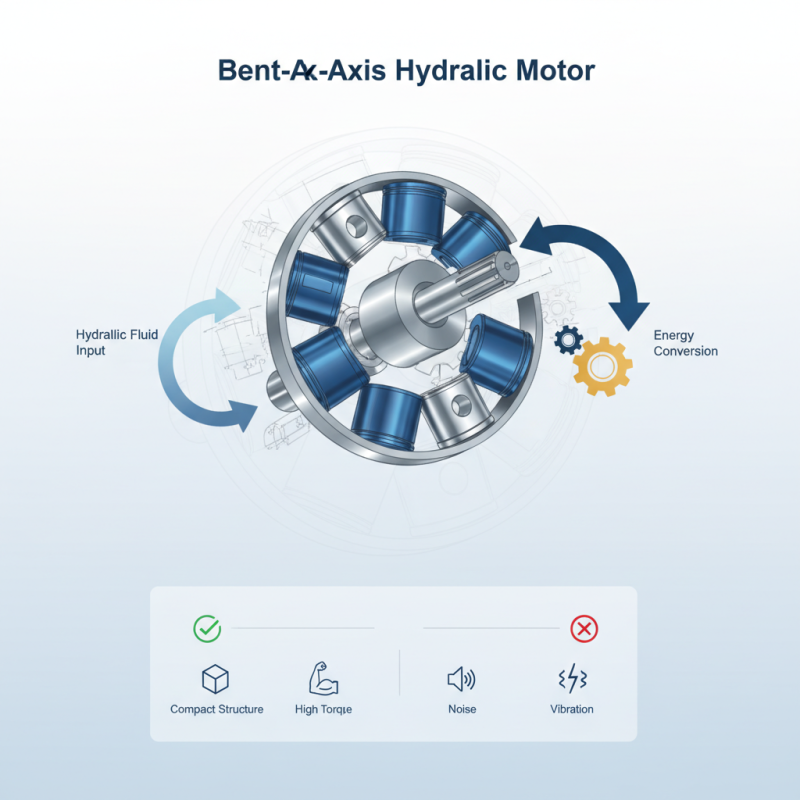
A Bent-axis Motor is a unique type of hydraulic motor that operates on a distinct principle. This motor features angled pistons that drive a shaft when hydraulic fluid is applied. The design allows for efficient energy conversion, making it popular in various industrial applications.
With its compact structure and high torque output, the Bent-axis Motor stands out in the world of hydraulic systems. It promises reliability and improved performance, yet it is not without potential drawbacks. Users may encounter issues like noise and vibration. Understanding these aspects is crucial for optimizing its use.
In summary, the Bent-axis Motor combines advanced technology with practical applications. While it delivers many benefits, it requires careful consideration and knowledge for effective implementation. Only then can its full potential be realized in the field.
Definition of a Bent-axis Motor and Its Key Features
A bent-axis motor is a hydraulic system that converts hydraulic energy into mechanical work. It's widely used in mobile machinery and industrial applications. The motor consists of a cylindrical rotor and a bent shaft. This design allows for high efficiency and compactness.
One unique feature is the adjustable angle of the rotor. This flexibility enhances performance across various operating conditions. The bent-axis motor often achieves efficiencies ranging from 85% to 95%, according to industry studies. High torque and speed capabilities also make it suitable for heavy-duty applications.
Tip: Regular maintenance checks can prevent performance issues. Ensure all components are well-lubricated.
Another aspect to consider is noise generation. Bent-axis motors can produce significant sound levels. This can be a concern in noise-sensitive environments. Users must weigh the benefits of efficiency against this downside.
Tip: Invest in sound-dampening solutions if noise is a major issue in your operation. Prioritizing a quieter work environment can lead to better employee satisfaction.
The Working Principle of a Bent-axis Motor Explained
A bent-axis motor is an innovative device that converts hydraulic power into mechanical energy. Its unique design features a rotor positioned at an angle, which creates a bent axis. This positioning allows for more efficient force application. The bent-axis arrangement changes how fluid flows and engages with the motor components.
The working principle involves hydraulic fluid entering the motor at an angle. As the fluid pressure builds, it pushes against the rotor blades, causing rotation. The bent angle maximizes the torque produced, enhancing power output. However, this design can lead to uneven wear on the motor parts, requiring careful maintenance. Operators should monitor performance regularly to avoid potential issues.
Real-world applications include construction machinery and ship propulsion. These motors can handle significant loads but can be complex to troubleshoot. Understanding the mechanics is essential for optimal performance. Users often face challenges in aligning the motor properly during installation. Adjustments might be needed over time, and calibration can be tricky.
What is a Bent-axis Motor and How Does it Work? - The Working Principle of a Bent-axis Motor Explained
| Parameter | Value | Description |
| Motor Type | Bent-axis | A type of hydraulic motor with a bent axis design. |
| Operating Pressure | up to 450 bar | Maximum pressure at which the motor operates efficiently. |
| Efficiency | 85% - 95% | Typical efficiency range of bent-axis motors. |
| Applications | Mobile equipment, industrial machinery | Commonly used in hydraulics for various machines. |
| Torque Output | Varies with size | Dependent on the motor size and design. |
| Weight | 20 kg - 300 kg | Weight range based on design and size. |
| Maintenance | Low | Generally requires minimal maintenance under normal operating conditions. |
Applications of Bent-axis Motors in Various Industries
Bent-axis motors are gaining traction across various industries due to their unique design and efficiency. These motors convert rotary motion to linear motion, making them useful in applications where space is limited. One significant area is in construction equipment. Here, bent-axis motors facilitate precise control of hydraulic systems in excavators and loaders. This precision enhances productivity and safety on job sites.
In renewable energy, bent-axis motors play a role in wind turbines. They help adjust blade angles for optimal energy capture. This adaptability is crucial for maximizing the efficiency of wind energy systems, especially in variable wind conditions. However, not every setup works seamlessly. Ensuring the motor operates efficiently may require ongoing adjustments and maintenance.
Tips for using bent-axis motors effectively include regular inspections to prevent wear and tear. Check for leaks in hydraulic lines to avoid performance issues. Additionally, training operators on proper usage can lead to better outcomes. Misunderstandings can cost time and resources, so clear communication is essential. Always keep an eye on performance metrics to identify any inconsistencies early on.
Applications of Bent-axis Motors in Various Industries
Advantages and Disadvantages of Bent-axis Motors
Bent-axis motors are gaining popularity in various industries due to their unique construction and performance. These motors convert rotational motion efficiently. Their design features an offset axis, which leads to certain advantages and disadvantages.
On the plus side, bent-axis motors offer high torque at low speeds. They can handle high pressures, making them suitable for demanding applications. According to industry reports, these motors can achieve efficiencies of over 90%. This efficiency translates to reduced energy consumption, which is crucial in an eco-conscious market. Additionally, they are compact. This compactness allows for flexibility in design and installation.
However, there are downsides. Bent-axis motors tend to be more complex to manufacture. This complexity can result in higher costs. Maintenance can also be challenging due to their intricate design. Some users report that these motors can be less reliable in certain environments. Moreover, improper installation may lead to performance issues. Thus, companies must weigh these pros and cons carefully before opting for bent-axis technology in their applications.
Comparisons with Other Types of Hydraulic Motors
Bent-axis motors are distinct in the realm of hydraulic motors. They differ significantly from other types, such as gear and radial piston motors. The bent-axis design allows for efficient energy conversion. It uses a shaft inclined at an angle. This geometry yields higher efficiency in torque transmission. According to industry reports, these motors can achieve efficiency levels over 90% in optimal conditions.
Comparing bent-axis motors to gear motors reveals interesting contrasts. Gear motors often have a straightforward design. They typically excel in simplicity but may not provide the same torque density as bent-axis motors. A study indicated that bent-axis systems offer 30% more torque in compact applications. However, this added efficiency can come with increased complexity, which may lead to higher maintenance needs.
Radial piston motors also differ in operation. They rely on rotating pistons. While they offer moderate efficiency, they might struggle with high-pressure applications. The bent-axis motor outperforms them in demanding environments. Nonetheless, manufacturers must consider installation space, weight, and cost. This complexity can lead to difficult decisions in hydraulic system design.