
How to Choose Cast Iron Valves for Global Sourcing?
Choosing Cast Iron Valves for global sourcing requires more than comparing prices on a supplier spreadsheet. Material grade, pressure rating, connection type, and service conditions must match the actual pipeline environment. A valve used for treated water may face different demands than one installed in wastewater, irrigation, or industrial cooling systems. Small mismatches can cause leakage, premature wear, or costly replacement work.
Experienced buyers examine body thickness, casting quality, coating adhesion, and machining accuracy. They also request pressure-test records, dimensional drawings, inspection reports, and traceable material certificates. Clear documentation matters. Reliable manufacturers should explain their testing process instead of offering vague assurances. Factory audits, sample evaluations, and independent inspections can reveal problems that polished catalogs hide. Photos help, but they are not proof.
Global sourcing adds practical challenges, including communication gaps, packaging damage, inconsistent labeling, and changing delivery schedules. Confirm applicable standards and local installation requirements before placing an order. A supplier may produce excellent valves, yet still lack stable quality control across large batches. That uncomfortable possibility deserves attention. Cost remains important, but the lowest quotation may exclude testing, protective packaging, or after-sales support. A stronger decision compares total ownership cost, supplier experience, technical responsiveness, and realistic production capacity. This guide explores those factors and shows how to build a more dependable purchasing process. Mistakes can happen. Good sourcing reduces their impact.
Define Cast Iron Valve Types and Their Industrial Applications
How to Choose Cast Iron Valves for Global Sourcing?
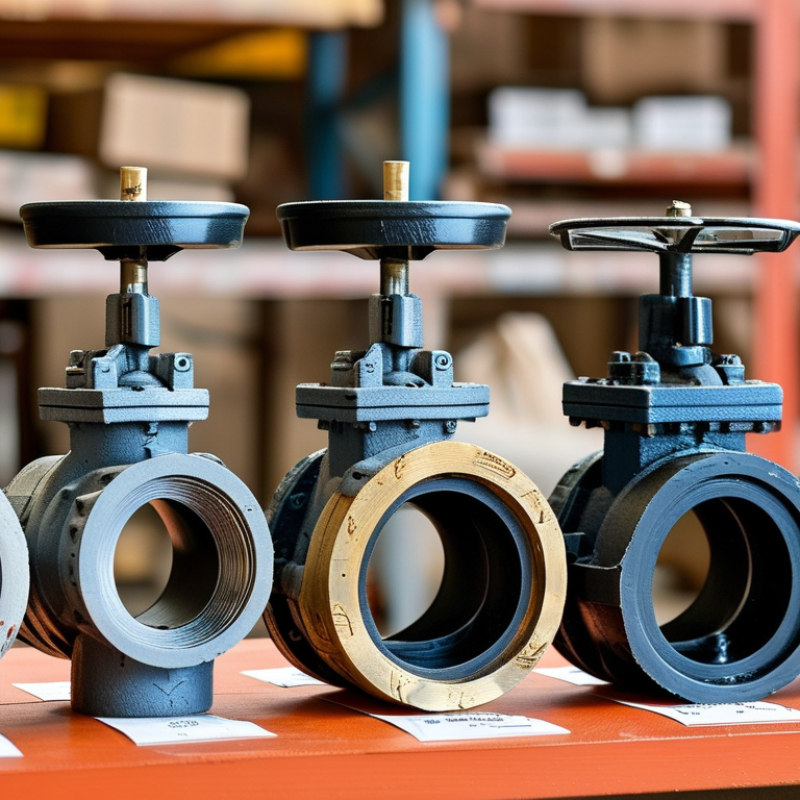
Cast iron valves control flow in water, HVAC, irrigation, and general utility systems. Their type determines how the system starts, stops, or regulates flow. Gate valves provide low resistance when fully open. They suit pipelines that need isolation, not frequent throttling. Globe valves offer better flow adjustment but create higher pressure loss. Check valves prevent reverse flow after pumps or elevated tanks stop. Butterfly valves use a rotating disc and require less installation space. They are practical for large-diameter water and air lines.
Material selection needs careful attention. Gray cast iron works well in moderate-pressure water service and stable indoor conditions. Ductile iron offers higher strength and better impact resistance. It is often selected for buried water mains and larger municipal networks. However, “cast iron” is not a complete specification. Buyers should confirm pressure class, temperature range, fluid compatibility, and corrosion protection. A valve for clean water may fail quickly in abrasive slurry.
During global sourcing, inspect end connections, face-to-face dimensions, and operating direction. Flanged, threaded, and wafer designs are not automatically interchangeable. Request material certificates, pressure-test records, coating details, and dimensional drawings. Packaging also matters; a cracked handwheel can delay installation. Standards differ by market, and translations can hide important limits. I have seen projects focus on unit price while overlooking actuator access and spare parts. That lesson is uncomfortable, but useful. Verify every detail before approval.
| Valve Type | Primary Flow-Control Function | Typical Cast Iron Material | Common End Connections | Typical Industrial Applications | Advantages | Important Limitations | Common International Standards | Typical Selection Guidance |
|---|---|---|---|---|---|---|---|---|
| Gate Valve | Full open or full closed isolation; the wedge or gate moves perpendicular to the flow. | Gray cast iron body Cast iron or coated wedge Stainless steel stem | Flanged; threaded or grooved designs may be available in smaller sizes. | Municipal water distribution, chilled-water lines, fire-protection systems, irrigation and general utility piping. | Low pressure loss when fully open; suitable for large line sizes; simple isolation duty. | Not recommended for throttling; repeated throttling can damage the seating surfaces. Gray cast iron is unsuitable for severe shock, high-impact service and many corrosive fluids. | ASME B16.1 for cast-iron flanges; MSS SP-70 for iron gate valves; EN 1171 for industrial gate valves. | Choose a resilient-seated design for water service where bubble-tight shutoff and lower operating torque are required. |
| Globe Valve | Regulates or throttles flow using a movable disc and a stationary seat. | Gray cast iron body Metal or resilient seat Steel or stainless steel stem | Flanged; screwed ends are used in selected small-size patterns. | Heating-water control, cooling-water balancing, steam or utility services within the approved pressure and temperature range. | Good throttling capability; predictable flow control; easier maintenance than many specialty control valves. | Higher pressure drop than a gate or full-port ball valve; unsuitable for highly abrasive slurries unless specially designed. | ASME B16.1 for flanges; EN 13709 for globe valves; applicable project piping specifications. | Use when regulation is more important than minimum pressure loss. Verify seat, packing and temperature ratings before steam service. |
| Swing Check Valve | Prevents reverse flow with a hinged disc that opens in the forward-flow direction. | Gray cast iron body Cast or ductile iron disc Stainless steel hinge parts | Flanged; wafer or lug connections are more common in butterfly-style check valves. | Water supply, wastewater, pump discharge, cooling-water circuits and low-to-moderate velocity utility lines. | Low pressure loss at adequate flow velocity; automatic operation; no external actuator required. | Can slam when flow reverses quickly; installation orientation and minimum flow velocity are important. Not ideal for pulsating flow. | API 594 for check valves; EN 12334 for industrial check valves; ASME B16.1 for cast-iron flanges. | Confirm allowable installation position, closing characteristics and pump-system surge conditions. |
| Wafer Check Valve | Stops reverse flow with one or two spring-assisted discs positioned between flanges. | Cast iron body Stainless steel disc Elastomer seat | Wafer type installed between pipe flanges. | HVAC water systems, compact pump skids, water treatment, compressed-air utilities and general process water. | Short face-to-face length; low weight; economical for space-limited installations. | Requires correct flange alignment and sufficient flow conditions; disc movement may be affected by pulsating or dirty fluids. | API 594; EN 12334; applicable wafer-valve dimensional requirements. | Select spring material and seat compound according to fluid chemistry, temperature and cycle frequency. |
| Butterfly Valve | Quarter-turn isolation or throttling using a rotating disc. | Cast iron body Ductile iron or stainless disc EPDM, NBR or PTFE seat | Wafer, lug, flanged or grooved. | HVAC chilled and hot water, water treatment, irrigation, fire-protection systems, air handling and low-pressure utility lines. | Compact and lightweight; fast quarter-turn operation; suitable for large diameters; comparatively low installation cost. | Disc remains in the flow path; throttling can create turbulence; elastomer compatibility limits temperature and chemical resistance. | EN 593; API 609; AWWA C504 or AWWA C516 for applicable waterworks designs; ISO 5752 for face-to-face dimensions. | For water service, EPDM is commonly selected; use NBR for suitable oil-containing service and verify the exact compound rating. |
| Plug Valve | Quarter-turn isolation using a cylindrical or conical plug with a flow passage. | Cast iron body Metal or lined plug Elastomer or PTFE sealing | Flanged; threaded connections are used in selected small sizes. | Water and wastewater, low-pressure gas utilities, drain systems and certain non-abrasive process services. | Quick operation; compact flow path; can provide reliable shutoff when the lining and plug materials are correctly matched. | Operating torque may increase with deposits; conventional cast iron is not suitable for high-pressure hydrocarbon or severe chemical service without a specifically qualified design. | API 599 for metal plug valves; EN 137 gost? | Specify lubricated or resilient-seated construction, fluid compatibility and cleaning requirements. |
| Diaphragm Valve | Controls or isolates flow by pressing a flexible diaphragm against a weir or full-bore seat. | Cast iron body Rubber diaphragm Lined wetted surfaces | Flanged; threaded or sanitary configurations depend on the design. | Water treatment, mildly corrosive liquids, slurry-handling utilities and applications requiring separation of the actuator from the process fluid. | Good isolation of internal moving parts from the fluid; suitable for some dirty or mildly abrasive media; low leakage potential. | Diaphragm life depends on temperature, pressure, flexing and chemical compatibility; not normally selected for high-pressure service. | EN 13397 for diaphragm valves; project-specific lining and material requirements. | Prioritize diaphragm compound, lining material, vacuum capability and cycle life over body material alone. |
| Foot Valve | Combines a check valve with a strainer to maintain pump suction prime and prevent reverse drainage. | Cast iron body Cast iron or stainless strainer Elastomer seat | Flanged or threaded suction connection. | Water-intake systems, irrigation pumps, transfer tanks, wells and low-pressure suction piping. | Protects pumps from debris; helps retain liquid in the suction line; automatic operation. | Screen blockage increases suction loss; access for cleaning is essential; not suitable where the suction fluid is highly corrosive without compatible lining. | Manufacturer and project specifications; connection dimensions should match the applicable flange or thread standard. | Size the strainer area to limit pressure loss and provide a removable arrangement for inspection and cleaning. |
| Y-Strainer with Drain | Removes suspended solids from a liquid or gas stream before sensitive equipment or valves. | Cast iron body Stainless or coated screen Gasketed cover | Flanged, threaded or grooved. | Boiler feed auxiliaries, HVAC water circuits, pump protection, compressed air and general utility piping. | Protects control valves, pumps and heat exchangers; drain connection supports maintenance. | It is not a shutoff valve; pressure drop rises as the screen loads; the body and screen must be protected from freezing and excessive differential pressure. | ASME B16.1 for cast-iron flanges; EN 过滤? | Specify mesh or perforation size, allowable pressure drop, clean-screen area and drain arrangement. |