
Why Choose a One Phase Transformer for Global Projects?
Global electrification is expanding unevenly. Remote clinics, irrigation pumps, workshops, housing developments, and small commercial buildings often need dependable single-phase power. The International Energy Agency’s Electricity 2024 report expects global electricity demand to grow strongly through 2026. More demand also means more attention to efficient local distribution. The U.S. Department of Energy reports that distribution transformer losses consume tens of billions of kilowatt-hours annually in the United States. Small efficiency gains matter.
A One Phase Transformer can match these practical conditions. Its compact enclosure fits beside a rural pump or inside a narrow utility room. Its simpler configuration can reduce installation complexity, especially where three-phase capacity is unnecessary. Correct voltage ratio, frequency, insulation class, cooling method, and local grid standards remain essential. One choice does not fit every project.
Transformer engineering author Martin J. Heathcote states, “The transformer is one of the most reliable pieces of electrical equipment.” That reliability depends on design discipline, not optimism. IEC 60076 provides the principal international framework for transformer performance and testing, while regional requirements may still differ. Engineers must verify altitude, ambient temperature, lightning exposure, load cycles, and spare-parts access before approval. A catalogue rating can look perfect on paper, yet fail under dusty, humid, or overloaded conditions. That is the uncomfortable part.
For global projects, the strongest decision combines efficiency data, field experience, maintainability, and verified compliance. A One Phase Transformer is not merely a smaller transformer. It is a focused solution for specific electrical realities.
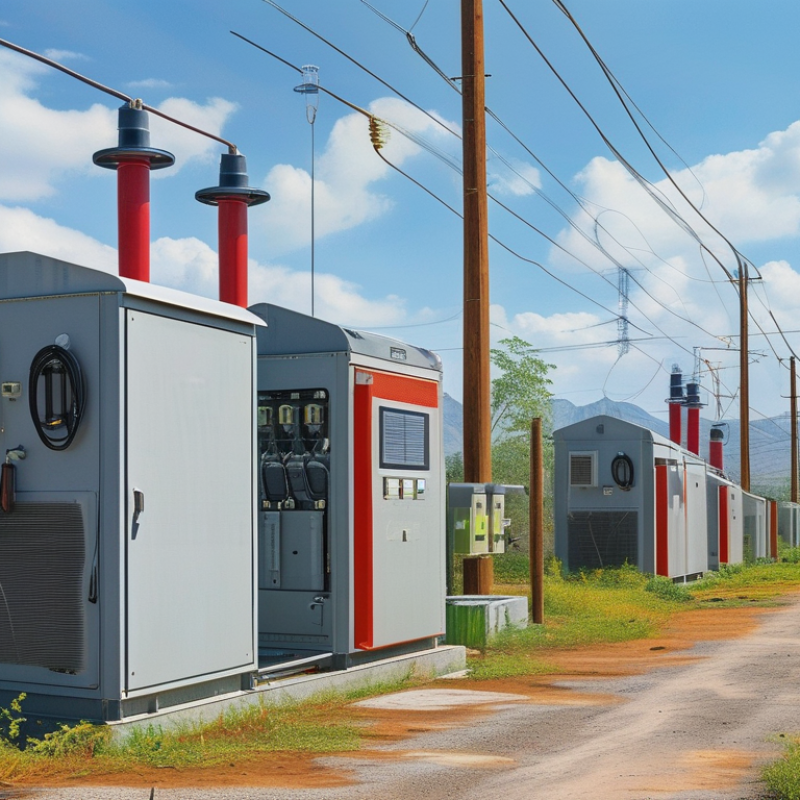
A single-phase transformer transfers electrical energy between circuits through electromagnetic induction. It changes voltage without changing frequency. In practical terms, it can reduce medium voltage to the level required by a small building, pump, lighting panel, or remote control system.
Its construction is comparatively simple: one primary winding, one secondary winding, a magnetic core, insulation, and protective housing. A 230-volt secondary may supply residential equipment, while a higher-voltage primary connects to a distribution network. The rating is usually expressed in kVA, not kilowatts, because transformer loading includes power factor effects. IEC 60076-1 establishes the core terminology and testing framework for power transformers. Engineers still need to check phase balance, ambient temperature, installation altitude, and inrush current. Small details matter.
The U.S. Department of Energy’s 2023 technical support analysis estimated that distribution transformers consume about 61 billion kWh annually in the United States. This figure shows why efficiency deserves attention, even for modest installations. The IEA’s Electricity 2024 report also recorded a 2.2% increase in global electricity demand during 2023, adding pressure to distribution equipment. Single-phase units suit many global projects because they are compact, adaptable, and easier to replace in decentralized networks. However, choosing one only because it costs less can be a mistake. A neat specification may still fail under harmonics, uneven loading, or severe outdoor conditions. Field experience often exposes that gap.
A one-phase transformer can make global power projects easier to adapt. It serves lighting, controls, small machinery, and remote service buildings. In many sites, loads are modest, but reliability still matters. A properly selected unit changes incoming voltage to a safer, usable level. It can also provide electrical isolation from upstream disturbances. Field engineers often value the simple layout. Fewer connections can support faster inspection and clearer fault tracing. That matters when spare parts or specialist technicians are far away.
Global power systems face different voltages, frequencies, climates, and installation standards. A single-phase transformer supports flexible distribution across these conditions. It can be installed near the load, reducing cable length and voltage drop. Outdoor projects may require sealed enclosures, corrosion protection, and careful thermal design. Frequency deserves special attention. A transformer changes voltage, not frequency. Engineers must verify compatibility before installation. Small details matter, such as terminal markings, grounding points, and access for testing.
However, single-phase design is not automatically better. Large motors, uneven loads, and future expansion may require a three-phase solution. High inrush current can also affect protection settings. A compact transformer may look ideal on a drawing and disappoint on site. That lesson is easy to overlook. A reliable selection process includes load measurements, short-circuit calculations, local code reviews, and realistic spare-capacity planning. Good documentation helps local teams operate the system safely after the original project crew leaves.
Single-phase transformers help projects adapt equipment to different national voltage systems. The chart shows common nominal single-phase supply voltages; actual utility configurations may vary by country, building type, and local regulations. Transformer selection should also consider frequency, load capacity, insulation level, and protection requirements.
Reference framework: IEC 60038 preferred standard voltages and commonly used national nominal supply systems.
A single-phase transformer can simplify power planning for international projects, especially where loads are distributed across small buildings, control rooms, or remote facilities. Its compact structure often suits locations with limited installation space. A technician can carry some smaller units through a narrow doorway, which matters on crowded construction sites.
International requirements demand more than matching input and output voltage. Engineers should confirm frequency, insulation class, temperature rise, grounding arrangements, enclosure protection, and local certification needs. A transformer designed for a 60 Hz network may not perform as expected on a 50 Hz supply. That detail is easy to miss. It should never be assumed.
Project teams also benefit from clear technical documents. Wiring diagrams, terminal markings, test records, and maintenance instructions help contractors work safely across language barriers. During factory acceptance testing, checking insulation resistance and no-load voltage can reveal problems before shipment. Still, field conditions may differ from laboratory results. Dust, humidity, unstable utility power, and limited maintenance skills can affect service life.
Single-phase equipment can support phased construction because separate units may be installed as each area becomes operational. Replacement planning may also be simpler when loads are independent. However, this approach is not ideal for every application. Larger industrial loads may require three-phase equipment, and poorly balanced distribution can create avoidable losses. Careful load assessment remains essential.
| Project Dimension | Typical International Requirement | How a One Phase Transformer Helps | Planning Consideration | Reference Basis |
|---|---|---|---|---|
| Power Rating | Common applications range from control and lighting loads of less than 1 kVA to small distribution or equipment loads of several hundred kVA. | Single-phase units can be selected in smaller increments, helping project teams match transformer capacity more closely to the actual load. | Allow for continuous load, motor starting current, future expansion, and site-specific ambient conditions. | Load schedule and electrical design calculations |
| Input Voltage | Supply voltages differ by country and installation. Common low-voltage systems include approximately 100–127 V and 200–240 V; medium-voltage primary ratings may also be required. | A one-phase design can be configured for a defined primary voltage and used for dedicated equipment, remote buildings, and local distribution points. | Confirm the nominal voltage, permissible voltage tolerance, insulation level, and available fault current before ordering. | IEC 60038; local grid requirements |
| Output Voltage | Typical outputs include 24 V, 48 V, 110/120 V, 220/230 V, and other project-specific control or utilization voltages. | Separate secondary windings or dedicated units can provide isolated and stable power for controls, instrumentation, lighting, and auxiliary systems. | Specify whether the output is required for single-phase loads, control circuits, battery charging, or general utilization. | Equipment datasheets and system voltage schedule |
| Frequency Compatibility | International electrical systems commonly operate at either 50 Hz or 60 Hz. | One-phase transformers can be designed for the required frequency, supporting projects installed in different regional power systems. | Frequency must match the transformer design and the connected equipment. A 50 Hz unit should not automatically be treated as suitable for 60 Hz service. | IEC 60076-1; project specifications |
| Electrical Isolation | Control, medical, industrial, and sensitive electronic systems may require galvanic separation between the source and the load. | Isolation transformers separate primary and secondary circuits, reducing direct conductive coupling and supporting safer equipment interfaces. | Isolation does not replace grounding, overcurrent protection, residual-current protection, or local safety measures. | IEC 60076 series; applicable installation codes |
| Voltage Regulation | Loads with changing current demand may experience voltage variation, especially on long cable runs or weak local networks. | Correctly specified winding design, impedance, and tap arrangements can help maintain the required secondary voltage under normal load conditions. | Define no-load voltage, full-load voltage, allowable drop, and starting conditions for motors or other high-inrush equipment. | Transformer design calculations and load-flow study |
| Installation Flexibility | Global projects may include control panels, modular buildings, telecom shelters, renewable-energy auxiliaries, and remote facilities. | Compact one-phase units can be installed close to the load, reducing the length of low-voltage circuits and simplifying localized power conversion. | Check enclosure type, mounting orientation, ventilation, cable entry, altitude, humidity, dust, and ambient temperature. | IEC 60529; environmental design conditions |
| Transport and Handling | International shipments may involve container transport, limited access roads, manual handling, or restricted installation spaces. | For comparable low-power applications, a one-phase transformer is often easier to package, move, and position than a larger multi-phase assembly. | Confirm shipping dimensions, lifting points, gross mass, impact protection, and corrosion protection for the destination climate. | Project logistics plan and installation method statement |
| Efficiency and Losses | Transformer efficiency depends on rating, core material, winding resistance, load factor, and operating temperature. | Matching the unit closely to the actual load can reduce unnecessary no-load and load losses compared with using an oversized transformer. | Compare guaranteed no-load loss, load loss, efficiency at the expected load point, and annual operating hours. | IEC 60076-1; purchaser loss schedule |
| Cooling Method | Small and medium one-phase transformers are commonly specified with natural air cooling or liquid cooling, depending on design and environment. | Air-cooled designs can simplify installation where liquid containment and maintenance are undesirable. | Ensure adequate airflow and clearance. For liquid-filled designs, assess fire safety, containment, inspection, and local environmental rules. | IEC 60076-2; site safety requirements |
| Protection and Safety | International installations generally require protection against overload, short circuit, overheating, and accidental contact. | A dedicated one-phase transformer makes it easier to coordinate upstream and downstream protection with the specific load circuit. | Specify fuses or circuit breakers, temperature protection, earthing terminals, touch-safe covers, and coordination settings. | IEC 60364; local electrical regulations |
| Compliance Documentation | Cross-border projects may require routine test reports, drawings, nameplate data, installation instructions, and conformity documentation. | A clearly documented one-phase unit supports inspection, approval, commissioning, and maintenance across multiple project locations. | Request rated data, wiring diagrams, test results, applicable standards, material information, and spare-parts recommendations. | IEC 60076; contract documentation requirements |
| Maintenance and Service | Remote sites often have limited access to specialist technicians and replacement equipment. | Simple, dedicated transformer arrangements can make fault identification, replacement planning, and local service activities more straightforward. | Provide inspection intervals, tightening requirements, insulation testing procedures, spare fuses, and replacement lead times. | Manufacturer maintenance instructions and site maintenance plan |
| Best-Fit Applications | Suitable applications include control panels, lighting systems, instrumentation, auxiliary power, small machinery, telecom equipment, and remote facilities. | The technology is most beneficial where the load is inherently single-phase or where a dedicated isolated supply is required. | Use a multi-phase transformer instead when the primary requirement is balanced three-phase power, large motor loads, or high-capacity distribution. | Application load profile and system architecture |
Selecting a one phase transformer begins with the destination, not the catalog. Check the local supply voltage, frequency, grounding method, and available service capacity. A 120-volt system needs different winding arrangements from a 230-volt system. Frequency also matters. A 50 Hz design should not be assumed suitable for a 60 Hz network.
Load behavior deserves equal attention. Record starting currents from pumps, compressors, lighting, and control equipment. A transformer sized only from average wattage may overheat during startup. Leave practical capacity for future expansion. Not too much, though. Oversizing can increase cost and reduce efficiency at light loads.
Regional conditions can change the specification. Coastal sites may require stronger corrosion protection. High-altitude installations need careful cooling calculations. Dusty workshops may need a suitable enclosure and easier maintenance access. Confirm insulation class, temperature rise, tap settings, and short-circuit protection with qualified engineers. Local electrical standards and certification requirements should be checked before production, not after shipment.
Field experience shows that a neat voltage table is never enough. Installation drawings can reveal missing neutral connections or unsuitable cable sizes. This step is often rushed. That is a mistake. Ask the local contractor to verify the supply and site conditions. A reliable selection combines measured data, regional rules, tested components, and clear documentation. Even then, project assumptions should be reviewed when construction conditions change.
Join our mailing list to receive the latest news and updates from our team.