
Choosing reliable Sludge Dewatering Equipment in China requires more than comparing catalogue prices. Municipal plants, industrial facilities, and wastewater contractors face different sludge characteristics. A machine handling oily sludge may perform poorly with biological sludge. Moisture content, particle size, polymer demand, and daily volume all affect the result.
Real plants rarely behave like brochures. A screw press may save energy, while a centrifuge may deliver drier cakes under demanding conditions. Belt filter presses can offer simple maintenance, but they need careful washing and stable polymer dosing. The best selection depends on actual operating data, not attractive photographs. A small material test can reveal more than a long sales presentation.
Experienced buyers should inspect stainless steel grades, welding quality, motor brands, control systems, and wear-part availability. Ask suppliers for verified capacity data, cake dryness ranges, power consumption, and references from comparable projects. Visiting a working installation in China can expose details that documents miss, such as noise, odor control, wash-water use, and operator access. These details matter.
Compliance and safety also deserve attention. Equipment should match the plant layout, electrical requirements, discharge rules, and workplace protection procedures. Reliable manufacturers usually provide drawings, commissioning support, maintenance guidance, and responsive after-sales service. Still, no supplier is perfect. Claims require checking.
This guide explains practical evaluation methods for selecting Sludge Dewatering Equipment in China. It focuses on performance, lifecycle cost, supplier credibility, and site suitability. The goal is not to find the cheapest machine. It is to choose equipment that keeps working when sludge conditions change.
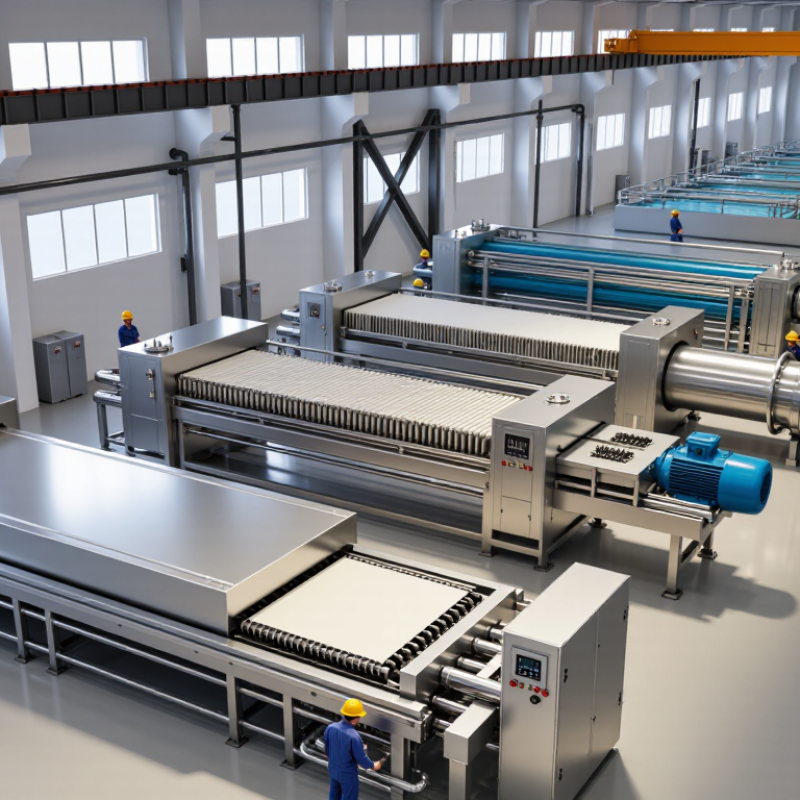
Sludge dewatering removes excess water from wastewater treatment solids, making handling safer and disposal more efficient. During treatment, sludge may contain organic matter, minerals, and microorganisms. Its moisture level affects transport costs, storage space, and final disposal options. Moisture matters.
In China, wastewater plants often compare screw presses, belt filter presses, centrifuges, and plate-and-frame presses. The right choice depends on sludge type, daily volume, polymer demand, and available floor space. A screw press may suit smaller facilities because it uses moderate energy and supports steady operation. A centrifuge can provide faster processing, but it usually requires skilled adjustment and consistent maintenance. Data beats guesswork.
Operators should test real sludge before selecting equipment. Laboratory results can change after rain, production shifts, or biological process adjustments. Check cake dryness, filtrate clarity, noise, cleaning time, and electricity use during trials. A specification sheet rarely shows these daily details. I have seen systems perform well in testing but struggle when sludge concentration changes. That weakness deserves attention. Select equipment with accessible wear parts, clear safety controls, and responsive technical support. Reliable operation matters more than an impressive capacity figure.
Understanding Sludge Dewatering and Its Role in Wastewater Treatment
Typical final cake solids vary by sludge characteristics, conditioning, and operating settings. Filter presses generally achieve the highest cake solids, while screw presses offer lower energy use and simpler continuous operation. Use these ranges as a preliminary comparison when selecting dewatering equipment for a wastewater treatment project.
Choosing top sludge dewatering equipment in China starts with the sludge, not the catalogue. Assess its total solids, volatile solids, particle size, oil content, grit, and viscosity. These factors affect polymer demand, belt loading, and cake formation. A laboratory sample can reveal more than a sales brochure. Test samples from different production days, because sludge rarely stays consistent.
Project requirements define the practical choice. Confirm daily sludge volume, peak flow, target cake dryness, solids capture rate, floor space, and available power. Check whether operators can manage polymer preparation and routine washing. Site temperature also matters, especially where sludge properties change between seasons. Small changes matter. A unit that works well at average flow may struggle during a short production surge.
Pilot testing remains valuable. It shows real cake texture, filtrate clarity, cleaning frequency, and polymer response under local conditions. Ask for measurable test records, operating limits, and maintenance intervals. Experienced engineers should compare these results with lifecycle costs, not only purchase price. In practice, I have seen projects select compact equipment too quickly, then face overloaded conveyors and higher wash-water use. That mistake is avoidable, although no selection is perfect. Leave room for future capacity and uncertain sludge behavior. A careful review of actual samples, site constraints, and operator skills usually leads to more reliable equipment decisions.
Choosing sludge dewatering equipment in China requires more than comparing catalog specifications. Sludge changes with industry, season, and treatment chemistry. Municipal sludge often needs different handling than chemical or food-processing sludge.
A belt filter press offers continuous operation and moderate energy use. It needs regular belt washing and careful polymer adjustment. On a humid coastal site, poor washing can quickly affect filtration performance.
A centrifuge produces a compact system with limited floor space. It handles variable feed conditions well, but power consumption and wear can be significant. Skilled operators must monitor vibration, differential speed, and feed concentration.
A screw press uses slower rotation and usually creates less noise. It suits smaller plants and sites where simple maintenance matters. However, its cake dryness may be lower than expected with oily or fibrous sludge.
Plate-and-frame presses can achieve high cake solids through strong pressure cycles. They are useful when transport costs depend heavily on cake weight. The trade-off is batch operation and more manual attention.
Some projects overvalue maximum dryness and overlook washing water, labor, and spare parts. That is a common mistake. Pilot tests should measure cake solids, filtrate clarity, polymer demand, noise, and daily maintenance. A small test can reveal problems hidden by attractive technical data. Operators should also inspect local service capacity, winter performance, and the actual disposal route before selecting equipment.
Choosing sludge dewatering equipment in China requires more than comparing catalog prices. Supplier quality often determines uptime, spare-part access, and technical support after installation. Ask for factory records, inspection procedures, and references from wastewater plants with similar sludge. A reliable supplier should explain feed solids, polymer demand, throughput, cake dryness, and power use clearly. Request testing with your sludge, not generic laboratory samples. Municipal sludge can change weekly. Good equipment data still needs field validation.
Evaluate performance under actual operating conditions. A machine producing dry cake at peak capacity may struggle during rainy-season dilution. Check throughput, noise, wash-water use, control-system stability, and cleaning time. Ask how quickly operators can replace belts, screens, seals, or bearings. These details affect labor and downtime. Total cost includes transport, installation, civil work, chemicals, electricity, maintenance, disposal, and training. A cheaper quotation can become expensive within one year. Buyers often underestimate polymer consumption. That mistake is understandable, but costly.
Tips: Compare three technical proposals using identical feed conditions. Require written performance guarantees with clear testing methods. Visit a working installation when possible, and speak with operators privately. Keep a contingency budget for commissioning adjustments. Do not accept perfect numbers without assumptions; real sludge is rarely perfect. A practical choice balances verified performance, responsive service, and predictable ownership cost.
| Evaluation Area | Key Metric | Practical Benchmark | Why It Matters | Recommended Verification | Suggested Weight |
|---|---|---|---|---|---|
| Supplier Quality | Manufacturing quality system | Documented quality procedures; traceable inspection records; welding and pressure-test controls where applicable | Reduces fabrication defects, installation delays, and premature failures | Review valid certificates, inspection plans, material records, and factory acceptance test reports | 8% |
| Relevant project experience | At least 3 comparable installations using similar sludge characteristics and capacity | Reference projects provide evidence that stated performance can be achieved in practice | Request anonymized performance data, operating hours, feed solids, cake solids, and polymer consumption | 8% | |
| Testing and commissioning support | Pilot testing or site-specific process validation before final selection | Sludge behavior varies significantly with origin, season, and chemical conditioning | Use representative sludge samples and define acceptance criteria in the contract | 7% | |
| Spare parts and service capability | Critical spare-parts list; technical response within 24–48 hours; clear warranty terms | Downtime can cost more than the initial equipment price | Check local service arrangements, spare-part lead times, training scope, and warranty exclusions | 7% | |
| Documentation and compliance | Complete manuals, electrical diagrams, safety instructions, and export documentation | Good documentation improves safe operation and future maintenance | Include documentation review in the technical bid evaluation | 5% | |
| Equipment Performance | Feed sludge solids concentration | Typically about 0.5%–5% dry solids, depending on the sludge source and thickening process | The equipment must be sized for the actual feed condition rather than water-treatment averages | Confirm the design range using laboratory testing and historical plant data | 5% |
| Cake solids content | Common operating ranges: approximately 15%–25% for belt presses, 18%–30% for centrifuges, and 15%–30% for screw presses | Higher cake solids generally reduce hauling, storage, and disposal volumes | Require test results based on the same sludge type, polymer, and throughput as the proposed application | 12% | |
| Hydraulic and solids throughput | Evaluate both m³/h and kg dry solids/h; design capacity should include reasonable operating margin | Hydraulic flow alone does not indicate actual dewatering capacity | Compare guaranteed capacity at the stated feed solids and cake-solids target | 10% | |
| Polymer consumption | Often evaluated in kg polymer per tonne of dry solids; actual demand depends on sludge chemistry and polymer type | Polymer is a major recurring operating cost and directly affects cake quality | Use jar tests and pilot trials instead of relying only on catalogue values | 10% | |
| Electrical energy demand | Compare kWh per tonne of dry solids, including ancillary equipment such as pumps, mixers, and polymer systems | Ancillary systems can materially change the actual energy profile | Request an itemized power schedule and verify it against the guaranteed operating point | 8% | |
| Noise, odor, and wash-water demand | Confirm site-specific limits, enclosure requirements, cleaning frequency, and wash-water consumption | Environmental and utility requirements can affect layout and operating cost | Include these values in the technical offer and site acceptance test | 5% | |
| Total Cost of Ownership | Initial equipment and auxiliary systems | Include dewatering unit, feed pump, polymer preparation, control panel, conveyors, enclosure, and commissioning | A low equipment price may exclude essential systems and installation items | Use a like-for-like commercial comparison with a complete scope-of-supply matrix | 8% |
| Installation, freight, and commissioning | Evaluate shipping, lifting, civil works, electrical installation, operator training, and start-up support | These costs can significantly increase delivered project cost | Request a separated quotation for each cost element and identify buyer-supplied items | 5% | |
| Chemical and energy cost | Calculate annual cost from guaranteed polymer consumption, power demand, operating hours, and local utility prices | Recurring costs commonly exceed the initial purchase price over the equipment life | Use a five- to ten-year life-cycle cost model with clearly stated assumptions | 10% | |
| Maintenance and replacement parts | Estimate routine service, wear components, lubrication, screens, belts, bearings, seals, and other consumables | Wear-part life and availability affect both cost and uptime | Request a preventive-maintenance schedule and a three-year spare-parts budget | 7% | |
| Sludge disposal and transport | Calculate disposal cost from annual wet-cake mass, cake solids content, transport distance, and local gate fees | Improving cake dryness can reduce the quantity requiring transport and disposal | Run sensitivity analysis for different cake-solids results and disposal prices | 8% | |
| Total Evaluation Weight | 100% | ||||
Selecting top sludge dewatering equipment in China begins with a controlled test, not a catalog claim.
Ask the supplier to test your actual sludge, including seasonal variations. Record feed solids, polymer dosage, cake moisture, throughput, filtrate clarity, power use, and operator time. Test several feed rates and pressure settings. Use actual sludge.
The first test is rarely perfect. Sludge properties may change after rain, industrial discharge, or biological treatment adjustments. Keep signed test records, sample photographs, and laboratory results. These details support fair technical comparisons and clearer purchase terms. Acceptance criteria should include measurable performance, safety provisions, spare parts, and response arrangements.
Installation planning should cover foundation strength, drainage, lifting access, electrical protection, ventilation, and cleaning space. A small layout mistake can delay commissioning.
During startup, technicians should verify rotation, sensors, pumps, polymer preparation, and emergency stops. Operators need practical training beside the machine, not only a manual.
Daily operation should include checking cake texture, filtrate color, pressure, vibration, and unusual noise. Clean contact surfaces after each shift when buildup is likely. Inspect belts, seals, bearings, screens, and dosing lines according to operating hours. Keep maintenance logs with dates and measured findings. This approach exposes gradual performance loss before it becomes a costly failure. Some procedures may need revision after real production data appears. That is not poor planning; it is responsible engineering.
Join our mailing list to receive the latest news and updates from our team.