
China’s chemical packaging sector has become an important sourcing base for international manufacturers, distributors, and logistics companies. This guide examines China’s top 10 Chemical IBC Tank suppliers through product quality, manufacturing experience, testing capability, customization, and export service. The ranking is indicative, not absolute. Buyer requirements can change the result.
Market demand is supported by the wider growth of reusable industrial packaging. Grand View Research reported continued expansion in the global intermediate bulk container market, driven by chemical, food, pharmaceutical, and agricultural applications. Its market analysis highlights cost efficiency, stackability, and reduced packaging waste as important adoption factors. Smithers also identifies sustainability and supply-chain efficiency as major forces shaping industrial packaging decisions in its flexible packaging and bulk container studies.
Compliance matters more than a polished catalogue. Chemical IBC Tank buyers should review UN certification, material compatibility, leak testing, valve performance, cage strength, and traceability records. ISO 16103 provides guidance for IBCs used with dangerous goods, while the UN Recommendations on the Transport of Dangerous Goods establish internationally recognized performance requirements. Local transport rules may still differ.
A practical supplier review should include factory audits, sample inspections, and documented test results. Look closely at weld seams, gasket materials, outlet protection, and label durability. Small details become expensive failures.
The strongest supplier is not always the largest one. Some manufacturers offer better engineering support, while others provide faster delivery or more flexible minimum orders. This article compares leading Chinese suppliers with that uncertainty in mind, helping buyers make a more reliable and evidence-based shortlist.
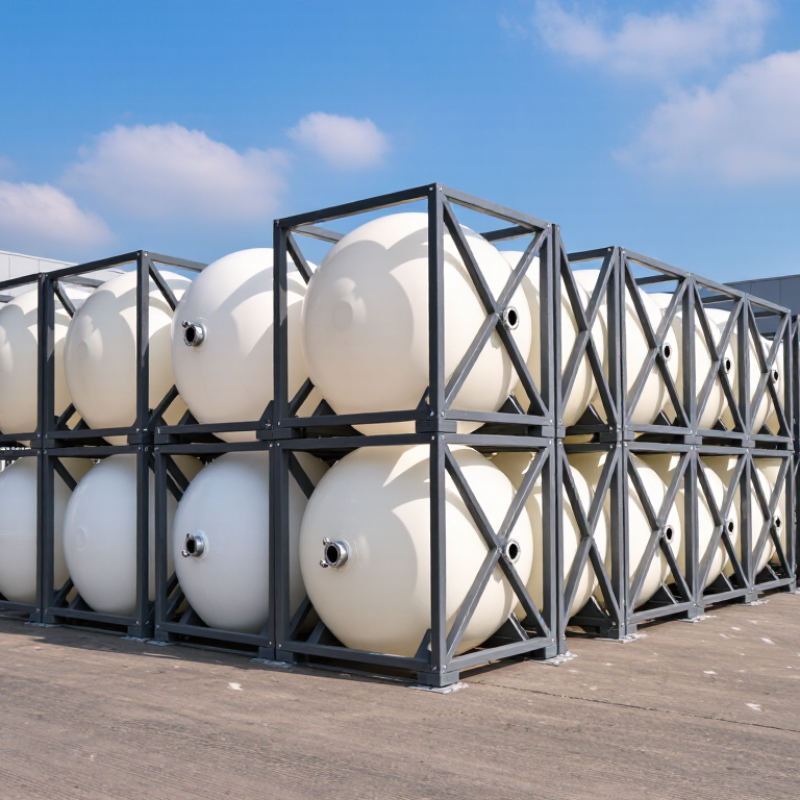
A chemical IBC tank is a reusable intermediate bulk container designed for controlled liquid handling. Most models hold about 1,000 to 1,500 liters. They usually combine a high-density plastic inner bottle, a protective metal cage, and a pallet base. This structure supports safer lifting, stacking, and movement than small drums.
Chemical IBC tanks are used for water-treatment liquids, solvents, additives, and other compatible industrial chemicals. Their bottom valve helps operators fill or discharge material with less manual handling. However, capacity alone does not prove suitability. The inner material must resist the chemical, temperature, pressure, and storage conditions.
A tank may look clean but still carry harmful residue or hidden damage. Checking technical data, safety sheets, valve condition, and certification records is essential when comparing suppliers. The cheapest option can become expensive after one compatibility mistake.
Tips: Confirm chemical compatibility before filling. Inspect the bottle, cage, pallet, gasket, and valve. Keep the tank upright and secure during transport. Do not reuse it blindly, even for similar liquids. Local transport and storage rules may also require specific markings or inspections. In practice, supplier quality matters, but user training matters just as much. That point is sometimes overlooked.
China Top 10 Chemical IBC Tank Suppliers?
Selecting a chemical IBC tank supplier requires more than comparing prices. Start with material compatibility. The tank, inner liner, gasket, valve, and pallet should suit the chemical’s concentration and temperature. Ask for compatibility data, not general promises. ISO 16103 guidance and applicable UN performance tests can support safer transport decisions. However, a certificate alone is not enough. Review its scope, test date, and issuing laboratory.
Reliable suppliers provide traceable production records. Each tank should connect to a batch number, inspection report, and leak-test result. Check wall thickness, weld quality, valve protection, lifting strength, and stacking performance. For outdoor storage, examine UV resistance and temperature limits. A supplier should explain cleaning controls and contamination prevention. Clear answers matter.
Factory experience also deserves close attention. Request samples, drawings, inspection procedures, and references from similar chemical applications. An on-site or video audit can reveal housekeeping and process discipline. Ask how complaints are handled and how failed units are investigated. This step is often overlooked. It should not be.
Do not select a supplier from documents alone. Trial a small batch under real filling, movement, and storage conditions. Record deformation, leakage, valve operation, and label durability. The first evaluation may expose assumptions in your specification. That is useful, not embarrassing. A dependable supplier accepts technical questions, admits limitations, and improves the design when evidence requires it.
Recommended screening allocation for evaluating chemical IBC tank suppliers. The criteria are based on widely used chemical packaging, transport, quality-control, and supplier-support requirements; the percentages are a practical evaluation model rather than supplier performance data.
How to use this chart: Confirm UN performance approval, chemical compatibility evidence, inspection records, traceability, quality systems, and after-sales support before comparing quotations. The highest-weighted areas should be verified with technical documents rather than marketing claims.
China’s Top 10 Chemical IBC Tank Suppliers
China’s top 10 chemical IBC tank suppliers are often judged by construction quality, testing discipline, and export experience. A reliable supplier should provide tanks with chemical-resistant HDPE inner bottles and reinforced steel frames. The valve and gasket deserve equal attention. Small failures can cause expensive leaks.
In a practical supplier review, buyers should examine wall thickness, pallet strength, weld quality, and closure design. Ask for batch inspection records, pressure test results, material certificates, and traceable production dates. Suppliers serving chemical industries should also understand required packaging classifications and transport documentation. Factory visits can reveal details that catalogues hide. Look closely at storage conditions and assembly lines.
A lower price is not always efficient. Not always.
Some suppliers offer custom capacities, discharge valves, labels, and protective fittings. Others focus on standardized models for faster delivery. The best choice depends on liquid density, filling temperature, handling equipment, and cleaning expectations. Reconditioning programs may reduce waste, but their inspection procedures need careful review. A used container is not automatically unsafe, yet poor records create uncertainty.
No top-ten list is perfect. Supplier rankings can change when resin prices, testing capacity, or export controls shift. Buyers should compare current samples rather than trust old claims. Clear communication matters too. If a supplier cannot explain compatibility limits, production tolerances, or rejected-unit procedures, its technical support may be weaker than its marketing.
| No. | Supplier Category | Typical Capacity | Inner Container Material | Outer Protection | Common Standards | Typical Chemical Applications | UN Certification |
|---|---|---|---|---|---|---|---|
| 1 | Industrial HDPE IBC manufacturers | 1,000 L | High-density polyethylene | Galvanized steel cage with steel or plastic pallet | ISO 16103; ISO 21898 | Acids, alkalis, detergents, water-based chemicals | Available for approved models |
| 2 | Chemical-duty IBC tank manufacturers | 600–1,250 L | UV-stabilized HDPE | Hot-dip galvanized steel cage | ISO 16103; UN Model Regulations | Industrial solvents, liquid additives, process chemicals | Model-dependent |
| 3 | Food-and-chemical compatible IBC manufacturers | 1,000 L | Natural or virgin HDPE | Galvanized steel cage with plastic pallet | ISO 16103; applicable food-contact requirements | Liquid ingredients, cleaning agents, non-hazardous chemicals | Optional |
| 4 | Heavy-duty export IBC manufacturers | 1,000–1,250 L | High-molecular-weight HDPE | Reinforced galvanized steel cage and pallet | ISO 21898; UN Recommendations | Long-distance transport of regulated liquids | Commonly available |
| 5 | Antistatic IBC tank manufacturers | 1,000 L | Conductive or antistatic HDPE | Groundable steel cage and pallet | IEC 61340-5-1; applicable dangerous-goods rules | Flammable liquids and solvent-based formulations | Subject to design approval |
| 6 | Stainless-steel IBC manufacturers | 500–1,500 L | 304 or 316L stainless steel | Stainless-steel frame or reinforced steel frame | ISO 21898; pressure or transport code as applicable | Corrosive chemicals, solvents, high-purity liquids | Configuration-dependent |
| 7 | Composite IBC manufacturers | 1,000 L | HDPE bottle with composite barrier layer | Steel lattice cage and integrated pallet | ISO 16103; UN performance testing | Permeation-sensitive chemicals and solvents | Available for selected designs |
| 8 | Insulated or heated IBC manufacturers | 500–1,250 L | HDPE or stainless steel | Thermal jacket, insulation, and steel frame | ISO 21898; electrical safety requirements where applicable | Viscous chemicals, waxes, resins, temperature-sensitive liquids | Product-specific |
| 9 | Intermediate bulk container OEM suppliers | 300–1,250 L | HDPE, stainless steel, or multilayer plastic | Design selected for handling and stacking needs | ISO 16103; ISO 21898 | Custom chemical logistics and plant-transfer systems | Optional and specification-based |
| 10 | Reusable and reconditionable IBC manufacturers | 640–1,000 L | Reconditioned or new HDPE bottle | Inspected steel cage with steel or plastic pallet | ISO 16103; inspection and cleaning procedures | Non-reactive industrial liquids and closed-loop logistics | Only when approved after inspection |
Note: Chemical compatibility, valve material, gasket selection, stacking load, temperature limits, and UN certification must be verified against the specific liquid and transport regulations before purchase.
Choosing among China’s top chemical IBC tank suppliers requires more than comparing prices. Materials must match the chemical’s compatibility profile, temperature range, and storage duration. Common options include high-density polyethylene inner bottles, stainless steel tanks, and composite designs. Each has practical limits. A lower-cost tank may perform poorly under repeated outdoor exposure.
Capacity often ranges from 500 to 1,500 liters, but usable volume depends on filling rules, density, and expansion space. Safety checks should include valve protection, grounding points, pressure behavior, leak testing, and pallet strength. Ask for test records, material certificates, and traceable inspection procedures. Customization may cover discharge valves, labels, dimensions, closures, barriers, and lifting features. However, every added feature can affect cleaning, maintenance, or delivery time. I have seen specifications that looked complete but lacked clear acceptance criteria. That gap deserves attention.
Tips: Request a chemical compatibility statement before ordering. Confirm whether the tank is designed for one-way use or repeated service. Compare test methods, not only certificates. Ask for a sample inspection report and photographs of critical welds, valves, and seals. Define capacity, tolerance, wall thickness, and packaging requirements in writing. Small details matter. Supplier communication should be tested early, especially when drawings or custom fittings are involved. A careful trial order may reveal weaknesses that a large purchase would hide.
China’s chemical IBC tank market deserves careful screening, not a simple “top 10” ranking. UNEP’s Global Chemicals Outlook II projects global chemical sales will double from about USD 5 trillion in 2017 to USD 10 trillion by 2030. That growth increases pressure on safe, traceable bulk packaging.
Build a shortlist of ten suppliers using measurable evidence. Request UN packaging approval, material certificates, production drawings, and recent leak-test records. Confirm the inner bottle’s resin grade, UV protection, valve material, gasket compatibility, and maximum filling temperature. ISO 16103:2005 provides guidance for recycled-plastics packaging used with dangerous goods. Ask whether testing covers your actual solvent, acid, or alkaline solution. A general certificate is not enough.
Inspect welding lines, corner protection, pallet strength, and label placement through video or an independent audit. Request a sample tank before placing a large order. Check drop, stacking, pressure, and leakage performance under documented conditions. Compare total cost, including tooling, spare valves, inspection, inland freight, and export packaging. The cheapest quotation often hides weaker fittings. I have seen specifications look complete while omitting gasket composition. That detail can cause real leakage. Require batch traceability and a written replacement process. Keep payment linked to inspection milestones. Supplier websites help, but factory evidence matters more.
Join our mailing list to receive the latest news and updates from our team.