
Top 10 Food Sealer Machines for Global Buyers
Choosing the right Food Sealer Machine is rarely a simple price comparison. Global buyers must examine sealing strength, vacuum performance, material compatibility, power supply, and service support. A machine that works beautifully in a small deli may struggle in a seafood plant. Conditions matter.
Packaging scholar Dr. Gordon L. Robertson offers a useful principle: “Packaging should protect food, preserve quality, and support safe distribution.” That idea guides this selection. A reliable sealer should create consistent closures around pouches, trays, or vacuum bags. It should also reduce leaks, moisture exposure, oxidation, and unnecessary product waste. Small details matter. Check the seal bar width. Inspect the chamber depth. Test the control panel with wet gloves.
This guide reviews ten Food Sealer Machine options for international purchasing teams, processors, retailers, and commercial kitchens. It considers sealing speed, temperature control, pump capacity, construction, cleaning access, and replacement-part availability. Compliance documentation also deserves attention, especially for equipment used near food-contact materials. Local voltage requirements should never be treated as an afterthought.
No ranking is perfect. Buyer priorities differ. One company needs portability, while another needs continuous production. Some models promise impressive output but provide limited technical support. That weakness can become expensive later. Hands-on testing remains valuable, even when specifications look convincing. The best choice balances performance, operating cost, operator safety, and dependable service. A cheaper machine may win today, then disappoint during a busy harvest season. That possibility deserves honest consideration.
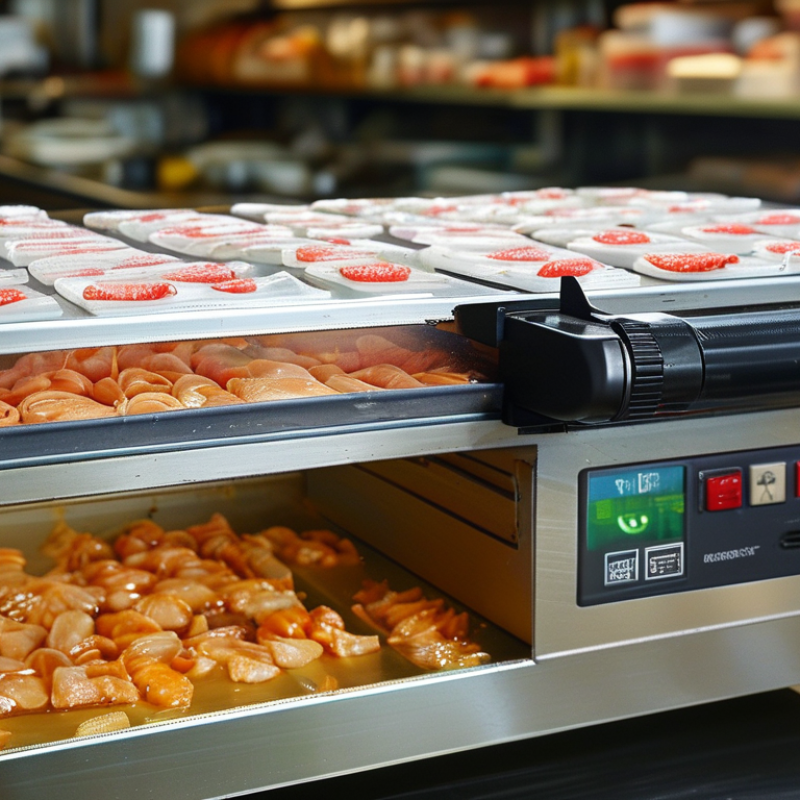
Food Sealer Machines Explained: Vacuum Packaging Market CAGR Near 6% to 2030
Food sealer machines are moving from small kitchens into restaurants, farms, and export warehouses. The vacuum packaging market is projected to grow at a CAGR near 6% through 2030, although forecasts differ by region. This growth reflects demand for longer shelf life, cleaner storage, and less food waste. Global buyers often compare the top 10 machines by sealing width, vacuum strength, cycle speed, and maintenance access.
Practical testing should include fresh meat, dry grains, sliced vegetables, and products with sharp edges. A reliable machine should create an even seal without burning the bag film. It should also support common packaging materials and offer simple pressure controls. In busy facilities, a removable seal bar and clear status display can reduce cleaning time. Small details matter.
No machine is perfect. A powerful vacuum may crush soft foods or draw liquid into the pump. Cheaper units can also overheat during repeated cycles. Forecasts are not promises. Energy prices, shipping conditions, food regulations, and regional incomes may change purchasing patterns before 2030. Buyers should verify local voltage, spare-part access, food-contact materials, and after-sales service. A ten-machine comparison becomes more useful when laboratory claims are checked against daily operating conditions.
| Rank | Machine Type | Typical Sealing Width | Vacuum Performance | Typical Throughput | Recommended Product Format | Common Film or Bag Material | Typical Power Range | Best-Fit Buyer Profile |
|---|---|---|---|---|---|---|---|---|
| 1 | Tabletop Chamber Vacuum Sealer | 250–400 mm | Up to approximately −0.95 bar | 2–6 cycles/minute | Meat, seafood, cheese, prepared meals, and wet products | Embossed or smooth heat-sealable vacuum pouches | 0.4–1.2 kW | Restaurants, small processors, specialty food producers, and export start-ups |
| 2 | External-Suction Vacuum Sealer | 280–400 mm | Approximately −0.80 to −0.95 bar | 2–5 cycles/minute | Dry foods, solid portions, powders, and low-volume retail packs | Embossed channel vacuum bags | 0.1–0.5 kW | Household, catering, farm shops, and low-volume commercial users |
| 3 | Double-Chamber Floor Vacuum Sealer | 500–800 mm | Up to approximately −0.95 bar | 4–12 cycles/minute | Large meat cuts, seafood, cheese blocks, and bulk food portions | Smooth vacuum pouches with heat-sealable multilayer films | 1.5–4.0 kW | Medium-sized processors requiring higher batch productivity |
| 4 | Continuous Band Sealer | 300–1,200 mm sealing path | Normally no vacuum; optional gas-flush versions available | 8–20 m/minute | Dry goods, snacks, grains, powders, frozen foods, and retail pouches | PE, PP, laminated films, and heat-sealable stand-up pouches | 0.3–1.5 kW | Packers needing continuous bag closing rather than air removal |
| 5 | Vertical Continuous Band Sealer | Typically 300–600 mm | Normally atmospheric sealing; optional nitrogen flushing | 8–20 m/minute | Powders, grains, sauces, liquids, and products packed in upright bags | PE, laminated plastic, aluminum-laminated, and coated paper films | 0.4–1.8 kW | Food factories filling bags from approximately 0.1–15 kg |
| 6 | Nozzle-Type Vacuum Sealer | 400–800 mm | Approximately −0.80 to −0.95 bar | 4–12 cycles/minute | Large pouches, bulk products, irregular packs, and industrial components | Smooth vacuum pouches and heavy-gauge multilayer bags | 0.8–3.0 kW | Industrial packers handling oversized or non-standard bag formats |
| 7 | Semi-Automatic Tray Sealer | Tray-dependent; commonly 190–400 mm | Optional vacuum and modified-atmosphere capability | 4–15 trays/minute | Fresh meat, poultry, seafood, produce, ready meals, and bakery products | Rigid PP, PET, CPET, or PP trays with lidding film | 1.5–4.0 kW | Retail suppliers seeking consistent presentation and shelf-life control |
| 8 | Modified-Atmosphere Packaging Tray Sealer | Tray-dependent; commonly 190–600 mm | Vacuum and gas flushing with programmable cycles | 6–25 trays/minute | Fresh protein, deli foods, fresh-cut produce, and chilled prepared meals | Barrier trays and oxygen or moisture barrier lidding films | 3–10 kW | Processors targeting extended chilled shelf life and retail distribution |
| 9 | Thermoform Vacuum Packaging Machine | Common web width: 250–600 mm | Vacuum, gas flush, and optional skin-pack functions | 4–15 cycles/minute | Portioned meat, cheese, seafood, sliced products, and ready meals | Formable barrier bottom web with heat-sealable top film | 8–30 kW | High-volume processors needing automated forming, filling, and sealing |
| 10 | Vacuum Skin Packaging Machine | Common working width: 300–600 mm | High vacuum with film conforming closely to the product | 2–10 cycles/minute | Premium fresh meat, seafood, cheese, and visually sensitive portions | Skin-compatible rigid trays and high-barrier skin films | 5–20 kW | Retail and export-oriented producers prioritizing appearance and product protection |