
Choosing a Professional Manual Toothbrush is not simply a matter of picking the most attractive handle.
Bristle shape, firmness, head size, and grip design can change how effectively someone cleans around molars, braces, implants, or sensitive gums. This guide examines ten professional manual toothbrush types, including soft-bristle, tapered-tip, end-tuft, orthodontic, sulcus, and compact-head models. Each type serves a different cleaning situation. A narrow head may reach behind a crowded lower molar, while a tapered filament can slide gently along the gumline. Small details matter.
Dental educator Dr. Edmond Hewlett has expressed a practical view: “The best toothbrush is the one you will use twice a day.” That advice remains useful because technique and consistency often matter more than premium branding. A costly brush cannot correct excessive pressure or rushed strokes. It is easy to forget that. Many users also choose medium bristles without considering gum sensitivity, which can be an uncomfortable mistake.
The comparisons ahead focus on clinical purpose, handling, bristle behavior, and everyday practicality. They also consider children, older adults, orthodontic patients, and people with limited hand control. Some classifications overlap, and not every “professional” design suits every mouth. That uncertainty deserves attention. A dentist or dental hygienist can recommend a safer option after examining individual needs. The right brush should feel controlled, gentle, and precise, even during a hurried morning.
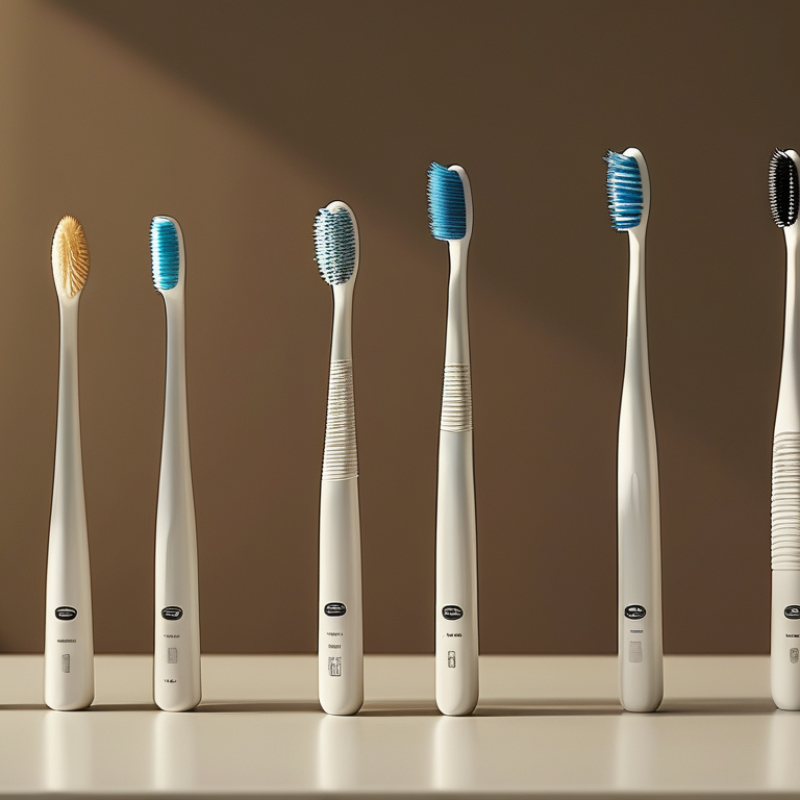
A professional manual toothbrush is designed around oral health needs, not luxury packaging. The term “professional” has no single global definition. Reliable evaluation should consider bristle safety, cleaning performance, durability, and user control. Bristles should have smoothly finished tips to reduce unnecessary gum irritation. Soft bristles are often suitable for routine cleaning, while individual needs may require dental guidance. Fit matters.
A suitable brush has a head small enough to reach behind molars and around crowded teeth. Its handle should remain stable with wet fingers. A clear grip can improve control near the gumline. Tuft spacing and bristle density also affect plaque removal. Recognized testing, material disclosure, hygiene packaging, and traceable manufacturing add credibility. Claims should be supported by clinical evidence, not attractive language.
In practical use, I notice that a comfortable brush encourages gentler, longer strokes. A powerful scrubbing motion can feel productive, but it may irritate sensitive gums. Not always. Replacement timing also matters because bent bristles lose their intended shape. I once preferred a larger head because it seemed faster. It was less precise around my back teeth. That experience changed how I judge professional design: performance must match real users, not just laboratory specifications.
Top 10 Professional Manual Toothbrush Types
Ten Professional Manual Toothbrush Types by Bristle and Head Design
Professional toothbrush selection depends on gum condition, tooth alignment, and brushing habits. A soft, flat-trim brush has even nylon bristles for gentle daily cleaning. A soft, tapered-bristle brush reaches slightly below the gumline with less pressure. An extra-soft, compact-head brush suits sensitive gums and smaller mouths. A medium, flat-trim brush may remove stubborn surface debris, but it can feel harsh when used aggressively. Bristle stiffness is not a substitute for proper technique.
A dense, multi-level brush combines different bristle heights for uneven tooth surfaces. A polished, end-rounded brush reduces rough contact against enamel and gums. An angled-head brush improves access around back molars. A single-tuft brush targets crowded areas, braces, and the edges of crowns. An orthodontic V-cut brush leaves space around brackets while cleaning nearby enamel. An interspace brush uses a pointed tuft for narrow gaps and partially erupted teeth. These are ten distinct professional manual toothbrush types.
In practice, the compact soft brush is often easier to control than a larger head. Still, personal comfort can mislead people. A brush that feels powerful may simply irritate the gumline. I also find that “specialized” designs do not always improve cleaning without careful movement. Replace a manual toothbrush when bristles bend, split, or lose their shape. People with bleeding gums, gum recession, braces, or dental restorations should seek individualized advice from a qualified dental professional.
Top 10 Professional Manual Toothbrush Types
Each manual toothbrush type serves a different oral-care need. Soft-bristle brushes suit most adults, especially people with sensitive gums or enamel wear. Ultra-soft brushes feel gentler after dental treatment, although they may require slower, more careful cleaning. Compact-head brushes reach crowded back teeth. End-tuft brushes clean around implants, bridges, and erupting wisdom teeth. Interdental brushes target spaces that ordinary bristles cannot enter. Orthodontic brushes use a shaped profile around brackets and wires. Sulcus brushes focus on the gumline. Medium bristles may suit some users, but they can encourage harmful pressure. Flat-trim and tapered-tip designs offer different contact patterns. Fit matters.
The World Health Organization’s Global Oral Health Status Report 2022 estimates that oral diseases affect nearly 3.5 billion people worldwide. That scale shows why daily technique matters, not just product selection. A Cochrane review of 56 trials found powered brushes produced modest plaque and gingivitis reductions, but manual brushes still work well with consistent technique. The evidence does not prove one manual shape suits everyone. A smaller head can improve access, yet it may clean slowly. A larger head feels efficient, but can miss the gumline. The categories are useful, not perfect.
Tips: Choose soft or ultra-soft bristles unless a dental professional advises otherwise. Hold the brush like a pencil. Use gentle, short strokes at the gumline for two minutes, twice daily. Replace it when bristles spread. Pressure matters. If bleeding continues for more than two weeks, arrange a professional assessment.
How Each Toothbrush Type Serves Specific Oral-Care Needs
The chart uses an evidence-informed suitability scale from 1 to 5, where 5 indicates a strong match for the listed oral-care need. Soft-bristled brushes are generally appropriate for everyday plaque removal, while specialized designs can improve access around braces, gumlines, implants, and hard-to-reach areas.
Scores represent functional suitability rather than guaranteed clinical outcomes. Brushing technique, gentle pressure, and professional dental advice remain important.
Choosing a professional manual toothbrush starts with your mouth, not the handle’s appearance. A compact head can reach back molars, while a longer head may clean broad surfaces efficiently. Soft, rounded bristles are usually safer for daily use. They reduce irritation when brushing pressure is controlled. Very firm bristles often create problems. They can wear enamel and aggravate sensitive gums.
Consider your specific needs. A tapered-bristle brush may clean narrow spaces near the gumline. An end-tuft brush helps around crowded teeth, bridges, or hard-to-reach molars. An orthodontic brush can work around brackets, while a sulcus-focused design supports careful gumline cleaning. Three-sided brushes may help users with limited hand control, but technique still matters. No design replaces consistent brushing.
Try this simple test. The head should reach comfortably without stretching your cheeks. The handle should feel stable with a relaxed grip. Brush for two minutes with small, gentle movements. If the bristles bend widely, your pressure is probably excessive. I once assumed a firmer brush cleaned better. That shortcut was wrong. A softer brush, used patiently, gave better comfort and more consistent coverage. Replace the brush when bristles spread, or follow dental advice after illness. Ask a dental professional if bleeding, pain, or persistent sensitivity continues. Different mouths need different tools.
Top 10 Professional Manual Toothbrush Types
Choosing among the top 10 professional manual toothbrush types matters less than using one correctly. Soft, compact, tapered, angled, multi-level, end-tuft, orthodontic, periodontal, child-sized, and eco-conscious designs serve different needs. A dental professional can match the bristle shape and handle control to gum sensitivity, braces, implants, or limited dexterity. Soft bristles are usually suitable for daily cleaning, but personal advice still matters. Place the bristles near the gumline at a gentle angle. Use short, light strokes. Cover two teeth at a time. Spend about two minutes on every surface. Do not scrub harder. Pressure may irritate gums and wear enamel.
After brushing, rinse the toothbrush thoroughly and shake off excess water. Store it upright, uncovered, and away from toilet spray. Sharing is not hygienic. Keep it dry between uses. I once left a damp toothbrush in a closed travel case. The smell was a useful warning. A ventilated case works better during travel, but remove the brush after arrival. Inspect the bristles weekly. Flattened, splayed, or stained bristles may clean less effectively. Replace the toothbrush every three months, or sooner when the bristles lose their shape. Persistent bleeding deserves professional attention.
Tips: Use gentle pressure and a timer. Brush before rushing. Clean the tongue lightly. Do not bite the bristles. Let the handle guide your hand, not force it. If a brush feels uncomfortable, reflect on its size and texture before choosing another type.
| No. | Manual Toothbrush Type | Key Design Features | Recommended Use | Proper Use Technique | Care Guidelines | Replacement Guideline |
|---|---|---|---|---|---|---|
| 1 | Soft-Bristle Flat-Trim Brush | Even-length, rounded soft nylon bristles with a standard-sized head. | Best general-purpose option for most adults and children. | Use gentle pressure and small circular motions at the gumline. Brush for about two minutes, twice daily. | Rinse thoroughly, shake off excess water, and store upright in an open, dry area. | Replace every three to four months, or sooner if bristles become bent or frayed. |
| 2 | Extra-Soft Sensitive-Teeth Brush | Very fine, flexible bristles designed to reduce brushing force on exposed or sensitive areas. | Useful for gum sensitivity, enamel wear concerns, or exposed tooth roots. | Use light pressure and angle the bristles slightly toward the gumline. Avoid aggressive horizontal scrubbing. | Rinse gently and allow the brush to air-dry completely between uses. | Replace at three to four months, or earlier when the fine bristles lose their shape. |
| 3 | Compact-Head Brush | Smaller head provides better access to back molars and other confined areas. | Suitable for small mouths, crowded teeth, or users who find standard heads difficult to maneuver. | Work one or two teeth at a time with short, gentle strokes around every surface. | Rinse around the compact head carefully to remove trapped toothpaste and debris. | Replace every three to four months or whenever the bristles are visibly worn. |
| 4 | Multi-Level Bristle Brush | Bristles of different heights are intended to contact tooth surfaces and areas between teeth. | Helpful for users seeking additional reach around uneven tooth surfaces. | Use light, overlapping strokes without forcing longer bristles into the gums. | Rinse from multiple angles and keep the head uncovered while drying. | Replace every three to four months or when the different bristle levels become flattened. |
| 5 | Angled-Neck Brush | The neck is angled to improve access to back teeth and the inner surfaces of the mouth. | Useful for users who have difficulty reaching posterior teeth. | Position the head so the bristles reach the gumline, then use small controlled motions. | Inspect the neck and head for toothpaste buildup and rinse thoroughly after use. | Replace every three to four months or sooner if the bristles splay. |
| 6 | End-Tuft Single-Tuft Brush | A small, concentrated tuft allows precise cleaning of individual teeth or difficult areas. | Useful around partially erupted teeth, bridges, implants, crowded areas, and the gumline. | Use short, gentle dabbing or circular movements around one area at a time; do not use it as a full-mouth replacement unless advised. | Rinse the tuft carefully and check for compacted debris between uses. | Replace every three to four months or when the tuft separates, bends, or becomes matted. |
| 7 | Orthodontic V-Cut Brush | A central channel or V-shaped profile is designed to fit around fixed braces and brackets. | Appropriate for people wearing fixed orthodontic appliances. | Brush above, directly over, and below the brackets using gentle short strokes. Clean around wires without bending them. | Rinse carefully around the shaped bristles and inspect for bent filaments. | Replace every three months or sooner when the bristles no longer fit effectively around the appliance. |
| 8 | Post-Surgical Ultra-Soft Brush | Exceptionally soft bristles and a gentle head design intended for delicate oral tissues. | May be used after oral procedures only when the dental professional permits brushing in the affected area. | Follow the dental professional’s instructions; use minimal pressure and avoid sutures or healing tissue until cleared. | Rinse gently, air-dry upright, and avoid sharing the brush. | Replace according to professional instructions, and immediately if contaminated or visibly damaged. |
| 9 | Gum-Massaging Bristle Brush | Soft bristles may include rounded tips or flexible features intended to stimulate the gumline. | Suitable for users who want gentle gumline cleaning in addition to routine toothbrushing. | Place the bristles partly on the teeth and gumline, then use slow, gentle motions without pressing into the gums. | Rinse thoroughly and allow full air circulation around the bristles. | Replace every three to four months or when the bristle tips become rough or distorted. |
| 10 | Manual Toothbrush with Tongue Cleaner | Combines a soft-bristle brush head with a textured surface on the back for tongue cleaning. | Convenient for users who want to clean the tongue as part of their daily oral-hygiene routine. | Brush teeth first, then lightly sweep the tongue cleaner from back to front without triggering discomfort or gagging. | Rinse both sides of the head thoroughly and keep the brush separate from other toothbrushes. | Replace every three to four months or when either the bristles or tongue-cleaning surface becomes worn. |
Join our mailing list to receive the latest news and updates from our team.