
China Top Hex Bolt Nut Manufacturers for Global Buyers?
China’s fastener industry combines large-scale steel production with mature machining and export capabilities. According to the World Steel Association, China produced approximately 1,019.1 million tonnes of crude steel in 2023. This industrial base supports extensive manufacturing of bolts, nuts, washers, and customized fastening systems.
For global buyers, selecting a reliable Hex Bolt Nut manufacturer requires more than comparing factory prices. Product consistency, material traceability, thread accuracy, surface treatment, and delivery performance directly affect project safety. ISO 898-1 provides mechanical property requirements for carbon steel and alloy steel fasteners, while ASTM and DIN standards guide many international purchasing specifications. Experienced suppliers should provide mill certificates, dimensional inspection records, hardness results, and coating documentation.
UN Comtrade classifies iron or steel screws, bolts, nuts, and similar products under HS 7318. This classification helps buyers review China’s international trade activity and compare supplier markets. However, trade volume alone does not prove manufacturing quality. A large shipment may still hide inconsistent plating or weak packaging. That is where careful auditing matters.
This guide examines leading Chinese manufacturers serving global buyers. It considers factory experience, production equipment, certification practices, export history, and technical support. Some rankings remain subjective. No supplier list is perfect. Buyers should verify current certificates, sample results, and production capacity before signing contracts. A supplier that performs well for construction anchors may not suit automotive-grade Hex Bolt Nut applications. Clear drawings, tested samples, and written inspection criteria remain essential.
Definition and Role of Hex Bolts and Nuts in Global Manufacturing
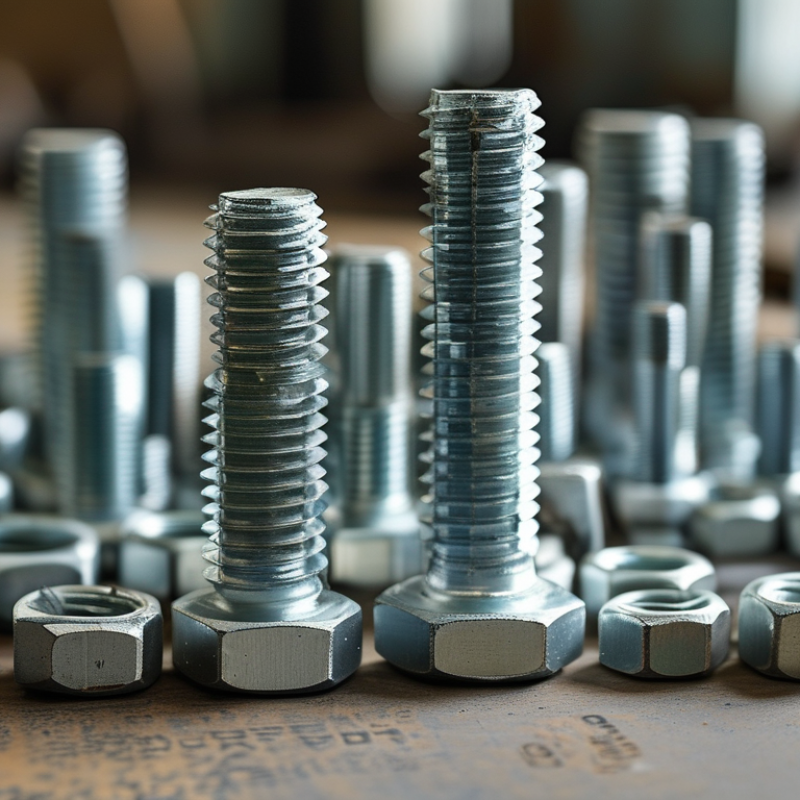
Hex bolts and nuts are threaded mechanical fasteners used to join machine parts, frames, and structural components. A hex bolt has a six-sided head and a threaded shaft. A matching hex nut clamps the connected parts when tightened. Together, they create a removable joint that supports maintenance, adjustment, and controlled assembly.
Simple hardware. Serious responsibility. In global manufacturing, fastener performance affects safety, production speed, and equipment service life. Engineers select bolt diameter, thread pitch, strength grade, coating, and length according to the application. A joint exposed to vibration may need controlled torque and additional locking methods. Outdoor equipment usually requires protection against moisture and corrosion. Small mismatches can cause uneven pressure, thread damage, or premature loosening.
Experienced buyers examine more than a low unit price. They review material certificates, dimensional inspection records, surface treatment details, and batch traceability. Sampling should include thread gauges, hardness checks, and visual inspection under clear lighting. Packaging also matters; mixed sizes can create costly assembly errors. However, paperwork is not proof of perfect performance. A certificate may be accurate yet incomplete for the actual operating environment. No specification replaces practical testing. Perfect selection is rare. Reviewing failures honestly often reveals better requirements for the next production order.
China Top Hex Bolt Nut Manufacturers for Global Buyers? - Definition and Role of Hex Bolts and Nuts in Global Manufacturing
Hex bolts are externally threaded fasteners with six-sided heads, while hex nuts are internally threaded components used to clamp parts together. The reference data below helps global buyers compare common metric sizes, mechanical classes, standards, materials, and inspection requirements without relying on company or brand information.
| Data Category | Specification or Size | Verified Technical Data | Typical Global Manufacturing Role | Buyer Inspection Focus |
|---|---|---|---|---|
| Metric Size and Thread Reference | ||||
| Metric coarse thread | M6 | Nominal diameter: 6 mm; pitch: 1.00 mm; common across-flats dimension: 10 mm; tensile stress area: approximately 20.1 mm² | Light machinery, electrical cabinets, brackets, and general assemblies | Check thread pitch, head/nut dimensions, thread gauge acceptance, and surface finish |
| Metric coarse thread | M8 | Nominal diameter: 8 mm; pitch: 1.25 mm; common across-flats dimension: 13 mm; tensile stress area: approximately 36.6 mm² | Equipment frames, guards, conveyors, and maintenance assemblies | Verify dimensional tolerances and matching nut property class |
| Metric coarse thread | M10 | Nominal diameter: 10 mm; pitch: 1.50 mm; common across-flats dimension: 16 mm; tensile stress area: approximately 58.0 mm² | Automotive components, machine bases, structural brackets, and industrial equipment | Check thread runout, bearing surface, coating thickness, and torque requirements |
| Metric coarse thread | M12 | Nominal diameter: 12 mm; pitch: 1.75 mm; common across-flats dimension: 18 mm; tensile stress area: approximately 84.3 mm² | Heavy machinery, steel frames, lifting equipment, and general structural connections | Confirm bolt length, nut engagement, hardness, and lot traceability |
| Metric coarse thread | M16 | Nominal diameter: 16 mm; pitch: 2.00 mm; common across-flats dimension: 24 mm; tensile stress area: approximately 157 mm² | Industrial structures, production lines, vehicle chassis, and high-load assemblies | Review proof-load or tensile test results and coating uniformity |
| Metric coarse thread | M20 | Nominal diameter: 20 mm; pitch: 2.50 mm; common across-flats dimension: 30 mm; tensile stress area: approximately 245 mm² | Heavy frames, construction equipment, energy equipment, and large machinery | Check dimensional inspection reports, material certificates, and tightening method |
| Metric coarse thread | M24 | Nominal diameter: 24 mm; pitch: 3.00 mm; common across-flats dimension: 36 mm; tensile stress area: approximately 353 mm² | Large structural joints, bridges, heavy equipment, and infrastructure assemblies | Require controlled torque or tensioning procedures and full batch documentation |
| Mechanical Property Classes | ||||
| Hex bolt property class | 8.8 | ISO 898-1 reference class; nominal minimum tensile strength: 800 MPa; nominal minimum yield strength: 640 MPa | General industrial machinery and medium-to-high load connections | Confirm permanent marking, hardness range, tensile test, and material traceability |
| Hex bolt property class | 10.9 | ISO 898-1 reference class; nominal minimum tensile strength: 1,040 MPa; nominal minimum yield strength: 940 MPa | Automotive, high-load machinery, pressure-bearing equipment, and compact joints | Check heat-treatment records, hydrogen embrittlement risk, and tightening specification |
| Hex bolt property class | 12.9 | ISO 898-1 reference class; nominal minimum tensile strength: 1,220 MPa; nominal minimum yield strength: 1,100 MPa | High-strength machine joints where high clamp load is required in limited space | Verify hardness, tensile performance, coating compatibility, and controlled installation |
| Hex nut property class | 8, 10, or 12 | ISO 898-2 reference classes; nominal proof-load stresses are approximately 800, 1,000, and 1,200 MPa respectively | Provides the internal thread and clamping reaction for matching high-strength bolts | Match nut class with bolt class; inspect thread fit, proof load, and manufacturer marking |
| Standards, Materials, and Surface Protection | ||||
| Common dimensional standards | ISO 4014 / ISO 4017 | ISO 4014 covers hexagon head bolts with a partially threaded shank; ISO 4017 covers fully threaded hexagon head screws | Supports standardized interchangeability across international supply chains | Confirm whether the specification requires partial or full threading and verify product dimensions |
| Common nut standard | ISO 4032 | Defines commonly used style-1 hexagon nuts with metric coarse and fine thread options | Provides compatible internal-threaded clamping hardware for ISO metric fasteners | Check nominal size, thread tolerance, height, across-flats dimension, and property class |
| Carbon or alloy steel | Steel fasteners | Frequently selected for strength and cost efficiency; mechanical performance depends on grade, heat treatment, and property class | Used in machinery, structural assemblies, vehicles, and industrial equipment | Request chemical composition, mechanical test results, hardness data, and heat-treatment records |
| Corrosion-resistant steel | A2 or A4 stainless steel | A2 is commonly associated with general corrosion resistance; A4 provides improved resistance in chloride-containing environments | Food-processing equipment, outdoor assemblies, chemical environments, and marine-related applications | Check stainless designation, magnetic condition if relevant, galling risk, and corrosion requirements |
| Zinc-based coating | Electroplated or mechanically applied zinc | Provides a sacrificial corrosion-protection layer; coating performance depends on process, thickness, and environment | Indoor machinery, general construction, storage systems, and moderate-exposure applications | Specify coating type, thickness, salt-spray requirement, thread fit, and hydrogen-embrittlement controls |
| Hot-dip galvanizing | Zinc-coated steel | Creates a comparatively thick zinc coating suitable for more demanding outdoor exposure than ordinary electroplating | Infrastructure, outdoor steelwork, utility structures, and construction assemblies | Check coating thickness, visual coverage, thread allowance, drainage design, and dimensional compatibility |
| Quality and Procurement Controls for Global Buyers | ||||
| Dimensional inspection | Critical dimensions | Nominal diameter, pitch, length, head height, across-flats dimension, nut height, and thread tolerance should conform to the ordered standard | Ensures interchangeability with tools, mating parts, and automated assembly equipment | Use calibrated gauges, thread plug/ring gauges, vernier or digital measuring tools, and sampling plans |
| Mechanical testing | Strength and hardness | Testing may include tensile strength, yield or proof load, hardness, and wedge testing where applicable | Confirms that the fastener can withstand the specified installation and service loads | Require lot-based test reports linked to heat number, production batch, and inspection date |
| Documentation | International shipment records | Typical documents include certificate of conformity, material or inspection certificate, packing list, and dimensional report | Supports customs clearance, traceability, customer audits, and regulated-industry compliance | Ensure documents use the same size, grade, coating, quantity, and batch references as the shipment |
| Installation control | Torque and preload | Required torque depends on diameter, property class, lubrication, coating, friction coefficient, and joint design | Controls clamp load and reduces loosening, thread damage, or bolt overload | Do not use a universal torque value; approve values through engineering calculations or joint testing |
| Packaging and logistics | Identification and protection | Packaging should protect threads from impact and moisture and identify size, grade, finish, quantity, and batch | Reduces mix-ups, corrosion, and receiving delays in international distribution | Check labels, carton quantity, corrosion protection, pallet condition, and shipping documentation |
Reference basis: ISO 898-1 for mechanical properties of carbon-steel and alloy-steel bolts, ISO 898-2 for nuts, ISO 4014 and ISO 4017 for hexagon-head fastener dimensions, and ISO 4032 for common hexagon nuts. Actual allowable loads, torque values, coating life, and suitability must be confirmed against the complete engineering design, application environment, and applicable purchasing standard.