Top 10 China RF Beauty Machine Types for Global Buyers
Choosing among the Top 10 China RF Beauty Machine Types requires more than comparing prices, power ratings, and polished product photos. Global buyers must examine real treatment goals, radiofrequency configuration, energy control, cooling systems, handpiece design, and operator training. Monopolar, bipolar, multipolar, fractional, microneedling, and vacuum-assisted systems may serve different professional settings. Each design creates a different balance between penetration, comfort, treatment speed, and maintenance needs.
Dr. Bruce E. Katz, a recognized dermatologist and laser medicine specialist, has stated, “Technology should support clinical judgment, not replace it.” This principle matters when evaluating a China Rf Beauty Machine for clinics, distributors, or regulated beauty facilities. Reliable buyers should request test reports, technical files, user manuals, warranty terms, and clear information about applicable market requirements. They should also confirm whether suppliers provide installation guidance, troubleshooting, replacement parts, and documented training. Small details matter. A loose cable, unclear interface, or delayed service response can disrupt daily treatments.
This guide compares ten practical machine categories for international purchasing decisions. It considers clinical versatility, user experience, supplier transparency, and long-term operating value. Yet no ranking fits every market. Some online claims still sound stronger than the available evidence. Buyers should question impressive before-and-after images and verify performance through demonstrations or independent evaluations. A lower price may look attractive. It may also hide weaker support. Careful selection remains essential for safer, more consistent, and commercially responsible RF beauty services.
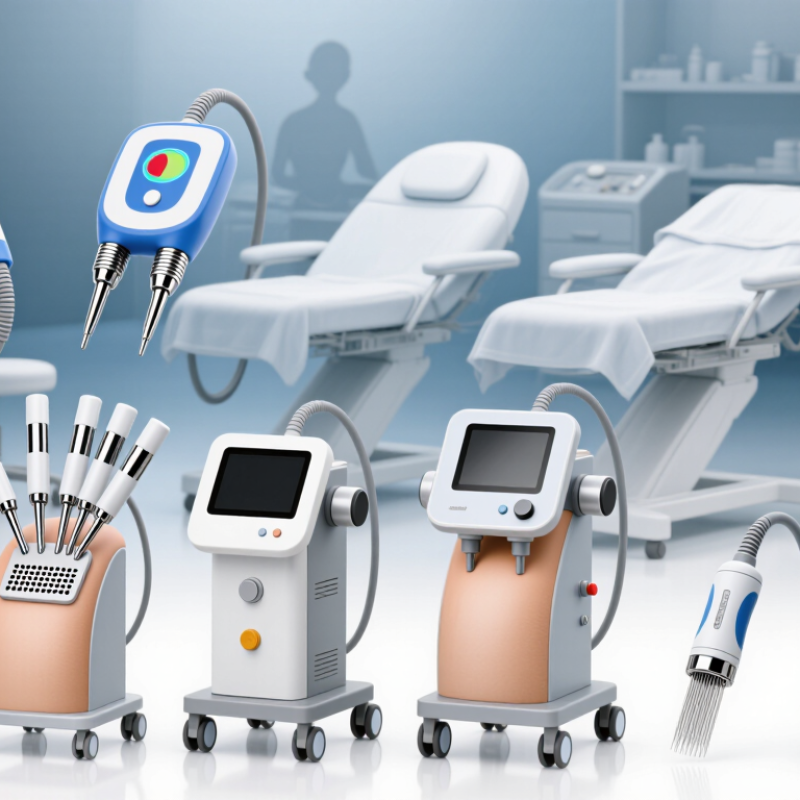
RF Beauty Technology: How Radiofrequency Energy Works in Skin Treatments
Top 10 China RF Beauty Machine Types for Global Buyers
Radiofrequency technology delivers alternating electrical energy into targeted skin layers. Tissue resistance converts this energy into controlled heat. That warmth may support collagen remodeling, firmer-looking skin, and improved texture over time. Results depend on energy settings, skin condition, treatment intervals, and operator training.
Global buyers commonly compare ten RF formats: monopolar, bipolar, multipolar, fractional, microneedling, vacuum-assisted, facial, body, portable, and salon-based systems. The difference is not merely appearance. Electrode design affects penetration, heat distribution, comfort, and treatment coverage.
A 2023 Grand View Research report valued the global aesthetic medicine market at about USD 18.9 billion in 2022, with projected growth near 9.6% annually through 2030. This growth suggests strong demand, but market size does not guarantee clinical performance. That needs careful testing.
Tips:
Check output stability, temperature monitoring, electrode contact, and emergency shutoff functions. Ask for electrical safety documentation and performance testing. Avoid relying only on maximum wattage. Lower, controlled energy can be more practical than aggressive heating.
The FDA notes that energy-based devices can cause burns, pigment changes, or scarring when used improperly. A 2024 MarketsandMarkets analysis also reported continued expansion in energy-based aesthetic devices, driven by non-invasive treatment demand. Still, reports often combine several technologies, so their figures are not specific to RF. That limitation matters.
Top RF Beauty Machine Categories for Global Buyers
Top 10 China RF Beauty Machine Types for Global Buyers
RF beauty machines are commonly grouped by energy delivery, treatment depth, and applicator design. Monopolar RF usually targets deeper tissue with one active electrode and a grounding path. Bipolar RF delivers energy between two electrodes, creating a more controlled treatment zone. Multipolar RF uses several electrodes for broader, more even coverage. Each category feels different on the skin.
Fractional RF delivers energy through small treatment points, while microneedling RF combines insulated or non-insulated needles with thermal energy. These systems require stronger operator training and careful skin assessment. Surface RF devices often suit facial maintenance, especially when adjustable cooling and temperature monitoring are available. Vacuum-assisted RF adds mechanical suction, which may help contact but can increase discomfort for sensitive users. Some platforms combine RF with LED or ultrasound. That does not automatically improve results.
Global buyers should examine frequency, power adjustment, handpiece size, cooling control, and emergency shutoff functions. Request test reports, user manuals, electrical certifications, and evidence of quality management. Local rules may classify devices differently, so confirm registration requirements before import. Operators should record skin condition, treatment settings, and client feedback. No category is perfect. A higher output is not always better. That assumption needs checking. Real purchasing decisions should match clinical purpose, staff experience, service support, and the buyer’s local compliance duties.
Key Features, Treatment Uses, and Target Skin Concerns
Top 10 China RF Beauty Machine Types for Global Buyers
Radiofrequency demand continues growing. The ISAPS 2023 Global Survey recorded about 19.1 million nonsurgical aesthetic procedures worldwide. For global buyers, the main question is not simply power. Treatment accuracy, operator control, and skin suitability matter more.
The ten common types include monopolar, bipolar, multipolar, tripolar, fractional RF microneedling, insulated microneedle RF, vacuum RF, RF with LED, RF with ultrasound, and body-contouring RF. Monopolar systems target deeper tissue heating for laxity. Bipolar and multipolar devices suit facial firmness and fine lines. Fractional and insulated microneedle RF address acne scars, enlarged pores, and uneven texture. Vacuum RF may improve circulation and temporary skin tightness. RF with LED targets mild redness and recovery support. Combined ultrasound systems focus on contouring and firmness. Body RF commonly addresses loose abdominal, arm, or thigh skin.
The evidence is not equally strong for every combination. A warmer handpiece is not proof of better remodeling. Buyers should request wavelength, frequency, temperature monitoring, treatment depth, and published clinical data. The FDA and EU frameworks also require careful product classification and documentation. Skin concerns differ by tone, thickness, and sensitivity. Darker or reactive skin may need lower energy and closer monitoring. Operators must avoid treating active infection, open wounds, or unsuitable medical conditions. In practice, comfort reports can be inconsistent, and marketing claims often move faster than clinical research. That deserves scrutiny.
Top 10 China RF Beauty Machine Types for Global Buyers
Typical RF delivery depth, treatment uses, and target skin concerns
Monopolar RF: Deeper volumetric heating for laxity, firmness loss, and body contouring.
Bipolar, Tripolar, and Multipolar RF: Controlled superficial-to-mid-depth heating for facial tightening, fine lines, and skin texture.
Microneedle RF: Fractional energy delivery for acne scars, enlarged pores, wrinkles, and uneven texture.
Vacuum RF: Combines tissue manipulation with RF heating for body firming and the appearance of cellulite.
RF with Ultrasound or LED: Combination platforms designed to address firmness, texture, redness, and general skin rejuvenation.
The chart shows representative treatment-depth ranges in millimeters. Actual penetration depends on frequency, electrode design, power, pulse duration, applicator pressure, tissue composition, and treatment settings.
How to Compare RF Machines for Safety, Performance, and Compliance
Top 10 China RF Beauty Machine Types for Global Buyers
How to Compare RF Machines for Safety, Performance, and Compliance
RF devices may use monopolar, bipolar, multipolar, or fractional microneedle configurations. Each design delivers energy differently. Global buyers should examine temperature control, impedance monitoring, cooling, and emergency shutoff functions. These details matter more than attractive casing or high wattage. A reliable supplier should provide test reports, user manuals, risk assessments, and traceable production records. Ask how each safety feature was verified. Do not accept vague answers.
Tips: Compare measured output, not advertised power. Request independent electrical safety and electromagnetic compatibility reports. Check whether the intended market requires registration, conformity assessment, labeling, or an authorized representative. Compliance documents must match the exact model and configuration. A similar-looking device is not enough.
Performance should be evaluated with repeatable testing. Review energy stability, treatment time, contact sensors, applicator durability, and software controls. Practical demonstrations can reveal uneven heating or uncomfortable handpiece weight. Clinical evidence should match the device type and intended use. Marketing photographs cannot replace documented data. I have seen specifications appear impressive, yet omit important operating limits. That is a warning sign. Buyers should also confirm operator training, contraindication guidance, maintenance intervals, and warranty support. Regulations change, and a certificate alone may not guarantee market access. Confirm requirements with qualified local professionals before placing an order.