
Choosing the right Fpga Chip supplier requires more than comparing unit prices. Global buyers must examine technology, production scale, delivery reliability, and technical support.
Ross Freeman, Xilinx co-founder and FPGA inventor, described the core value clearly: “The customer can define the hardware after purchase.” That flexibility still matters today. It supports industrial controllers, medical equipment, communications systems, aerospace platforms, and edge-computing devices. However, flexibility does not remove purchasing risk.
Leading suppliers include AMD, Intel, Lattice Semiconductor, Microchip Technology, and Achronix. Each company serves different performance, power, package, and lifecycle requirements. AMD often fits high-performance acceleration needs. Intel provides broad FPGA families and development tools. Lattice focuses strongly on low-power and compact designs. Microchip supports specialized industrial, communications, and embedded applications.
The strongest supplier is not always the largest one. A buyer should verify product availability, process technology, security features, development-board support, and long-term maintenance. Check actual lead times. Ask for traceability documents and engineering samples.
A reliable comparison should also consider total ownership costs. Software licenses, tool learning curves, thermal design, and redesign risks can exceed the chip price. This is where many purchasing plans become too optimistic.
Some data sheets look impressive. Real deployment may disagree. Independent testing remains valuable.
This guide compares major Fpga Chip suppliers for global buyers. It considers technical capability, manufacturing confidence, application fit, and support quality. The goal is practical selection, not promotional ranking. Buyers should still validate every supplier against their own design, compliance, budget, and delivery conditions.
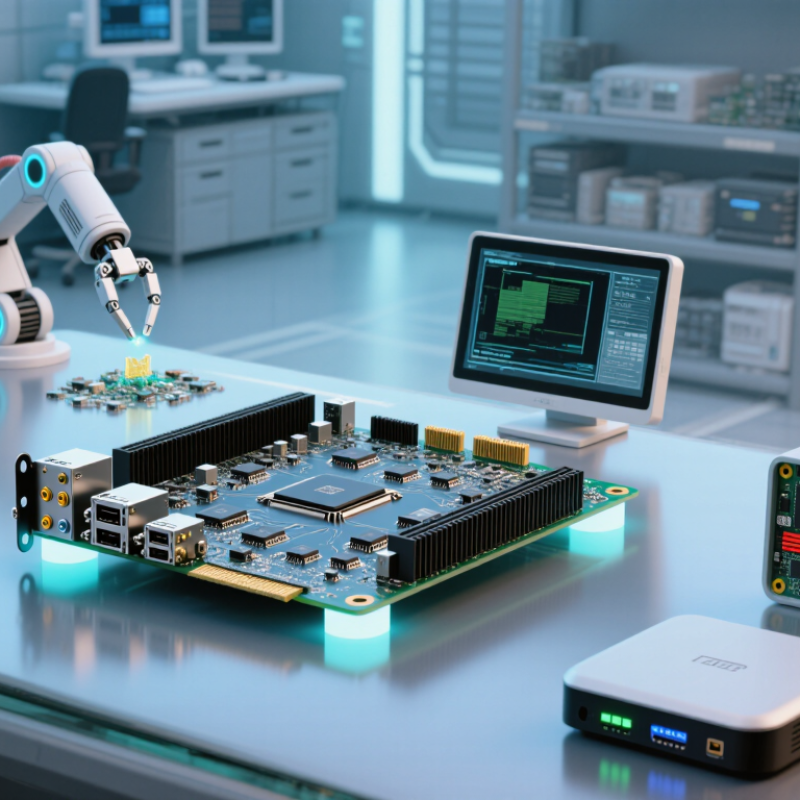
FPGA Technology and Its Role in Modern Electronics
Field-programmable gate arrays, or FPGAs, give engineers configurable hardware for changing electronic systems. Unlike fixed chips, they can be reprogrammed after manufacturing. This flexibility supports industrial controls, medical instruments, communications equipment, and intelligent transport systems.
In practical development, an FPGA can process several data streams at the same time. A camera module may send images while the device filters noise and controls storage. Engineers can also adjust logic during testing, which reduces redesign pressure. However, flexibility does not guarantee success. I once underestimated heat buildup in a compact enclosure. The design worked on the bench but slowed under continuous operation. That experience showed why timing, power, cooling, and firmware deserve equal attention.
Tips: Global buyers should request documented operating temperatures, package details, lifecycle information, and test procedures. Compare development tools, technical support, and supply consistency, not only unit prices. Ask for traceable quality records and sample testing before approving large orders. A reliable supplier should explain tolerance limits clearly. If specifications seem vague, pause the purchase. FPGA performance depends on the complete system, including circuit layout, memory, power delivery, and software control. Small wiring changes can affect signal integrity. During evaluation, measure real workloads instead of trusting ideal demonstrations. A thorough review may take longer, but it can reveal failures that ordinary inspection misses.
Technology and procurement comparison by FPGA product category, capability, application, and global buyer considerations
| FPGA Category | Typical Logic Capacity | Typical On-Chip Memory | High-Speed Interfaces | Typical Power Profile | Common Applications | Global Buyer Priorities |
|---|---|---|---|---|---|---|
| Low-Cost / Entry-Level FPGA | Approximately 2,000–50,000 logic elements or LUTs | Tens of kilobits to a few megabits | GPIO, SPI, I²C, UART, basic parallel interfaces | Low power; commonly suitable for fanless embedded designs | Consumer devices, industrial control, sensor hubs, education, small communications products | Unit price, availability, small package options, development-tool accessibility |
| Mid-Range FPGA | Approximately 50,000–500,000 logic elements or LUTs | Several megabits to tens of megabits, often with block RAM | PCI Express, Ethernet, DDR memory, JESD204, multi-gigabit serial links on selected devices | Moderate power; thermal design is normally required | Machine vision, industrial automation, medical equipment, test systems, broadcast processing | I/O flexibility, memory support, lifecycle stability, reference designs, engineering support |
| High-End FPGA | More than 500,000 logic elements or LUTs in the largest device families | Tens to hundreds of megabits, frequently combined with embedded memory blocks | PCIe Gen4/Gen5, 10–100+ GbE-class connectivity, DDR4/DDR5, high-speed serial transceivers | High power; advanced cooling, power sequencing, and signal integrity planning may be required | Data-center acceleration, radar, wireless infrastructure, aerospace systems, high-performance vision | Performance per watt, transceiver quality, software ecosystem, supply continuity, technical support |
| FPGA with Embedded Processor | Typically tens of thousands to hundreds of thousands of programmable logic resources | On-chip RAM plus external DDR memory support; capacity depends on the device family | Ethernet, PCIe, USB, memory controllers, industrial fieldbus interfaces | Low to high depending on processor load, programmable fabric use, and interface speed | Robotics, edge computing, networking, automotive control, software-defined instrumentation | Processor architecture, operating-system support, security functions, boot reliability, long-term software maintenance |
| FPGA with Integrated AI / DSP Resources | Logic capacity varies widely; dedicated DSP and matrix-processing blocks reduce fabric usage | Embedded memory blocks and optional external high-bandwidth memory support | High-speed Ethernet, PCIe, camera interfaces, DDR memory, serial transceivers | Moderate to high; workload, precision, clock rate, and memory traffic strongly affect consumption | Real-time inference, video analytics, industrial inspection, communications signal processing | Toolchain maturity, supported neural-network formats, deterministic latency, throughput per watt |
| Radiation-Tolerant / Mission-Critical FPGA | Usually lower than the newest commercial high-end devices because reliability is prioritized | Device-specific radiation-hardened or radiation-tolerant memory resources | Space-grade serial links, LVDS, SpaceWire, memory and custom interfaces | Application-specific; thermal and radiation margins are essential design factors | Satellites, launch systems, avionics, defense electronics, high-reliability instrumentation | Radiation data, qualification level, traceability, configuration protection, export-control requirements |
Global buyers should evaluate FPGA suppliers by technical support, supply stability, and verified product history. A capable supplier provides clear datasheets, lifecycle notices, and traceable inventory. In practical sourcing, response speed matters when a prototype fails during testing. Some suppliers offer flexible volumes, while others focus on long-term industrial programs. Choosing only by price can create costly delays.
Look for suppliers with authorized channels and documented quality procedures. Check device speed grades, logic capacity, package options, power requirements, and operating temperature ranges. Ask for production samples before placing a large order. Independent inspection may also confirm labeling and condition. This step feels slow, but it protects the project.
Tips: Request a written quotation with delivery dates, warranty terms, and minimum order quantities. Compare at least three suppliers. Confirm whether technical engineers can review your design needs. Keep records of batch numbers and inspection results. Do not assume every listed part is immediately available. Inventory changes quickly, especially for older devices. A supplier may promise continuity, yet the evidence can be incomplete. That deserves a second look.
Top FPGA Chip Suppliers for Global Buyers: Key FPGA Product Families and Application Areas
FPGA product families differ by logic capacity, memory, power use, and processing support. Entry-level devices suit sensor hubs, motor controllers, and compact industrial equipment. They often provide predictable timing with modest power demands. Mid-range families support factory vision, networking systems, and medical imaging equipment. They balance processing resources, connectivity, and board space.
High-performance FPGAs target data centers, radar platforms, telecommunications, and real-time analytics. These devices may include faster transceivers, larger memory blocks, and stronger parallel processing capacity. Some families combine programmable logic with processor cores. That structure helps teams manage Linux-based control tasks beside deterministic hardware functions. It can reduce board complexity, but software integration becomes more demanding.
Application needs should guide supplier evaluation. For automotive systems, buyers should examine temperature ratings, functional safety evidence, and long-term availability. Aerospace projects may require radiation-tested options and detailed traceability records. Industrial buyers often value stable tools, clear reference designs, and responsive technical support. Medical equipment demands reliable validation and controlled product changes. A large device is not always the better device. Oversizing can increase power, cost, and design risk. Smaller parts may run out of routing resources later. That trade-off deserves careful testing. Documentation quality also varies more than expected, so engineers should verify timing models, security features, and lifecycle commitments before final selection.
Indicative upper-bound logic density by FPGA product family. Capacity is shown in thousands of logic cells; actual specifications vary by architecture and device generation.
Application guidance: Low-density devices are commonly selected for industrial control, motor control, and consumer interfaces. Mid-range devices support communications, machine vision, and test equipment. High-density, SoC, and accelerator-oriented devices are used for networking, radar, video processing, robotics, edge AI, and data-center acceleration.
A reliable FPGA supplier should provide more than a competitive quotation. Evaluate engineering support, traceability, production capacity, and lifecycle planning together. Grand View Research estimates that the global FPGA market reached about USD 9.8 billion in 2023, with continued growth through 2030. That expansion increases supplier choices, but also increases comparison errors. Ask for verified data on logic cells, lookup tables, embedded memory, DSP blocks, transceiver speed, I/O voltage, package options, and maximum power. Do not rely on one-page product summaries.
Tips: Request evaluation samples, thermal reports, errata, and documented change notifications. Check whether the supplier can support your operating temperature, assembly process, and expected product lifetime. Confirm test coverage and lot traceability before approving a production source. A low unit price can hide expensive redesign work.
WSTS reported global semiconductor sales of USD 526.8 billion in 2023, showing how quickly supply conditions can shift. Therefore, compare quoted lead times with actual allocation history, not promises alone. Review factory certifications, failure-analysis procedures, regional support, and continuity plans. For high-speed designs, request signal-integrity models and reference constraints. For low-power systems, examine static and dynamic power separately. No checklist is perfect. A spreadsheet may still miss firmware risk, tool-version compatibility, or package shortages. Require independent technical review before final supplier approval.
Choosing top FPGA chip suppliers requires more than comparing unit prices. Global buyers should assess device availability, lifecycle visibility, technical support, and regional logistics. The WSTS Spring 2024 forecast valued worldwide semiconductor sales at approximately $611 billion for 2024, showing strong demand across industrial and computing markets. Demand is rising.
A practical sourcing review should examine authorized distribution channels, buffer-stock policies, and realistic lead-time data. Ask whether the supplier can provide traceability documents, production status updates, and replacement guidance for long-term designs. Support quality also matters. A responsive applications engineer can reduce debugging time when signal integrity, thermal limits, or firmware changes create problems. However, support promises are sometimes vague. Buyers should test response times before signing large contracts.
Supply-chain resilience needs measurable details. The SIA reported that global semiconductor sales reached about $527 billion in 2023, while production remained geographically concentrated. This concentration can expose buyers to transport delays, allocation changes, and regional disruptions. A stronger purchasing plan uses approved second sources, staggered deliveries, and safety stock for critical assemblies. Keep records.
Supplier scorecards should track on-time delivery, defect rates, engineering response, and forecast accuracy. A low price may hide expensive redesign work. Another uncomfortable lesson is that even audited forecasts can fail during sudden demand spikes. Buyers should review assumptions quarterly, not trust a polished spreadsheet forever.
Join our mailing list to receive the latest news and updates from our team.