What is a Universal Bone Drill and How Does it Work?
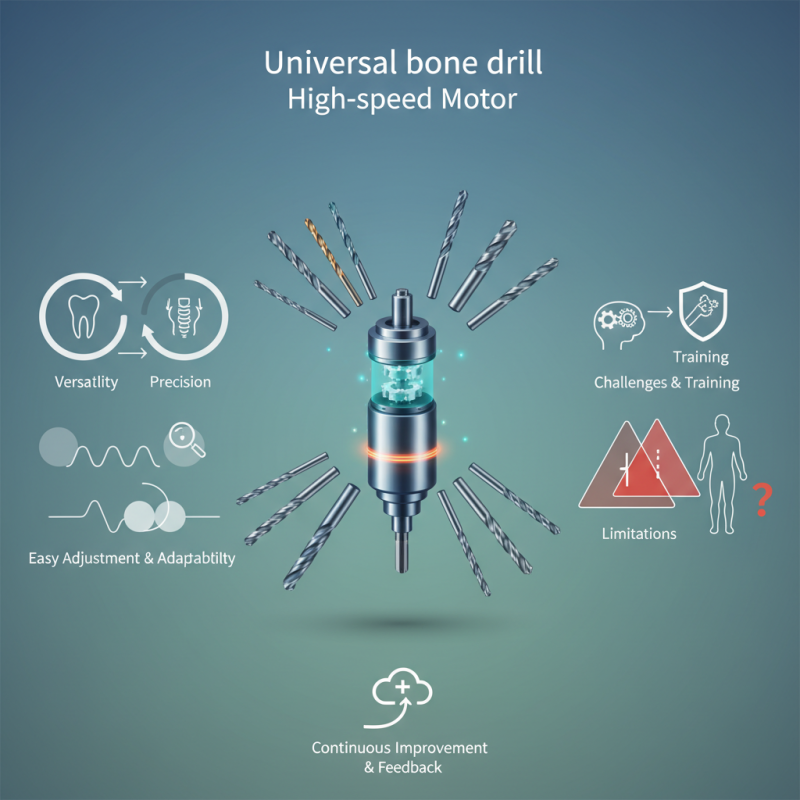
The Universal Bone Drill is a remarkable surgical tool. It is designed to simplify bone procedures. This device combines versatility with precision. Surgeons use it for various orthopedic and dental surgeries. Its design allows for easy adjustment and adaptability.
Understanding how a Universal Bone Drill functions requires exploring its components. It features a high-speed motor and interchangeable drill bits. These parts work together to create optimal results. However, challenges in technique and training can arise. Not all surgeons may master its use right away. Training programs are essential for effective operation.
Despite its advantages, there are limitations to consider. The Universal Bone Drill may not be suitable for all patients. Certain conditions can complicate its application. It’s crucial for medical professionals to assess each case individually. Continuous improvement and feedback can enhance its utilization in the future. This reflects the ongoing evolution of surgical tools.
What is a Universal Bone Drill? An Overview
A Universal Bone Drill is an essential tool in modern orthopedic surgery. Its primary function is to create precise holes in bone for various procedures, including drilling for screws or anchors. This versatile device can be utilized in multiple settings, from trauma surgeries to reconstructive operations. The design typically allows for various attachments, making it adaptable for different surgical needs.
The global orthopedic power tools market was valued at approximately $1.8 billion in 2021, with a projected growth rate of 5.2% annually. This growth underscores the increasing reliance on advanced surgical instruments. Universal Bone Drills play a crucial role in enhancing surgical outcomes. Despite the technological advancements, challenges remain. Surgeons sometimes face difficulties in selecting the appropriate drill settings, causing a need for continuous training and adaptation.
Precision is critical in orthopedic procedures. Many studies highlight how improper drilling can lead to complications, such as misplaced screws or infections. Even with advanced tools, human error can occur. Each surgery is unique, necessitating a careful assessment of the situation. This ongoing challenge prompts discussions in the medical community about standardizing protocols for drill use. Addressing these issues will enhance patient safety and surgical efficiency.
Universal Bone Drill Usage Statistics
This bar chart illustrates the frequency of universal bone drill usage across various surgical specialties. Orthopedic surgery accounts for the largest percentage, highlighting its crucial role in this field.
Key Components of a Universal Bone Drill
A universal bone drill is essential in modern orthopedic surgery. Understanding its key components helps improve surgical outcomes. Typically, the main parts include the motor, drill bits, and the control system. Each plays a critical role in the overall functionality of the device.
The motor powers the drill, providing speed and torque. Most high-quality models operate at various speeds, allowing for flexibility. Drill bits are specially designed for different applications, such as those made for cortical or cancellous bone. Using the wrong bit can result in complications. A recent industry report highlights that 20% of surgical errors are linked to improper tool usage.
The control system allows surgeons to adjust settings precisely. Such technology enhances precision during procedures. Despite advancements, there are still issues like battery life in portable models. Having a reliable backup is crucial to avoid interruptions. Studies show that approximately 15% of complications arise from equipment failures. Understanding these elements is vital for any surgical team.
What is a Universal Bone Drill and How Does it Work? - Key Components of a Universal Bone Drill
| Component | Description | Function |
| Motor | Electric or pneumatic motor that powers the drill | Provides the necessary torque and speed for drilling into bone |
| Drill Bit | Specialized cutting tool designed for bone drilling | Creates precise holes for surgical procedures |
| Depth Control Mechanism | Adjustable mechanism to limit the drilling depth | Prevents over-penetration and protects surrounding tissues |
| Cooling System | System to cool the drill bit during operation | Maintains optimal operating temperature for safety and efficiency |
| Power Supply | Source of energy for the motor | Ensures consistent and reliable power to operate the drill |
Mechanisms of Action: How the Drill Operates
A universal bone drill is a versatile tool used in various medical procedures. Its primary function is to create precise holes in bone tissue. The drill operates using a rotating mechanism, which transforms rotational motion into radial cutting action. This allows for efficient drilling, minimizing the risk of damaging surrounding tissues.
When the drill is activated, it spins at high speeds. This spinning action is critical for cutting through the dense structure of bone. The tip of the drill is designed to penetrate bone, creating a clean hole. The design often features sharp edges and a pointed tip to assist with this process.
While this tool is effective, there are challenges. Proper stabilization during drilling is essential. If not, the drill may slip, leading to complications. Furthermore, understanding bone density variations is vital. Not every patient is the same. This can affect the drilling speed and technique used. Adjustments may be needed to ensure safety and efficacy.
Applications in Orthopedic Surgery: Data and Trends
Universal bone drills are increasingly vital in orthopedic surgery. These versatile tools have transformed surgical techniques. Their design allows for precise drilling through various bone types. Surgeons can use them for multiple applications. They serve in procedures like joint replacements and fracture repairs. Such flexibility enhances surgical efficiency.
Trends indicate a growing preference for these tools. More surgical teams are adopting universal bone drills. This shift seems driven by improved outcomes. Surgeons report quicker procedure times and fewer complications. Yet, not all surgeries yield the same results. Some procedures still face challenges, highlighting the need for careful planning. Data shows varying success rates across different applications. Insights into these trends are essential. They guide future innovations in surgical technology. Understanding both advantages and limitations will be crucial.
Safety Protocols and Best Practices in Bone Drilling
Bone drilling is a critical component in orthopedic surgery. Adhering to safety protocols during this process is essential. Data from the American Academy of Orthopaedic Surgeons shows that improper techniques can lead to complications in 2-5% of cases. This emphasizes the need for best practices.
Before starting the procedure, ensure the workspace is sterile. This prevents infections. Wearing appropriate personal protective equipment (PPE) reduces exposure to airborne contaminants. Studies indicate that 35% of infections in surgeries stem from lack of proper PPE.
During the drilling process, the speed and pressure must be controlled. Excessive force can lead to thermal necrosis of the bone. Monitoring the drill temperature is advisable. It is suggested that drills be paused every 30 seconds to cool down. Understanding these details is crucial. Continuous training on these safety measures remains necessary. Reflecting on past surgeries can help identify where improvements are needed.