2026 How to Use Pop Up Spray Sprinkler for Efficient Watering?
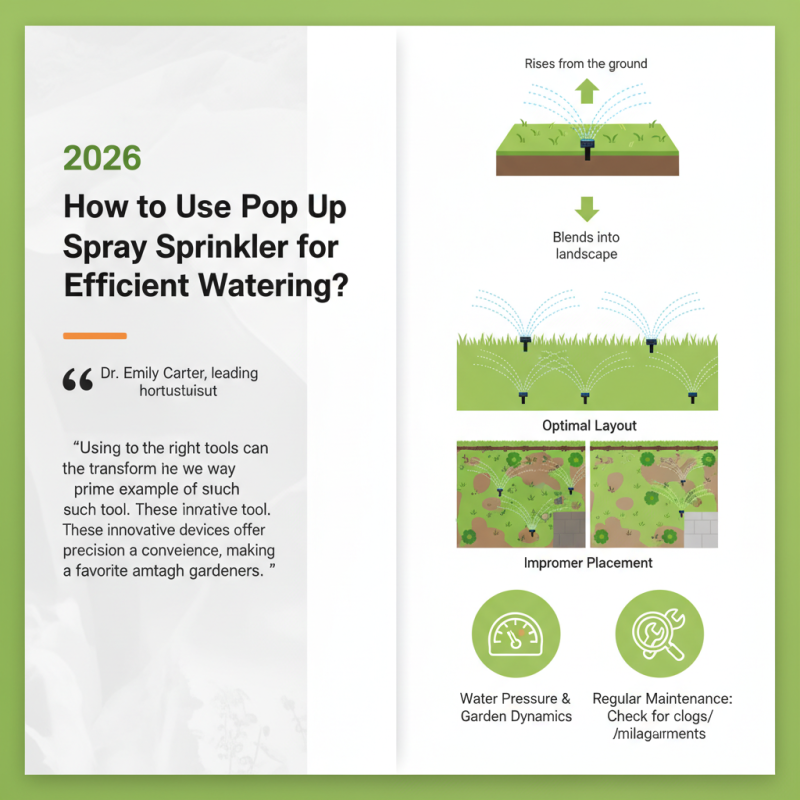
In today's world, efficient watering is crucial for maintaining healthy landscapes. One expert in this field, Dr. Emily Carter, a leading horticulturist, emphasizes, "Using the right tools can transform the way we care for our gardens." The Pop Up Spray Sprinkler is a prime example of such a tool. These innovative devices offer precision and convenience, making them a favorite among gardeners.
The Pop Up Spray Sprinkler operates by rising from the ground to distribute water evenly. Its design blends into the landscape when not in use. This feature not only saves space but also reduces the risk of damage. However, not all installations lead to optimal results. Sometimes, improper placement can lead to uneven watering or wasted resources. Paying attention to the layout is vital for success.
It’s essential to consider the water pressure and the dynamics of your garden. Each garden is unique, and a one-size-fits-all approach simply doesn’t work. While the Pop Up Spray Sprinkler provides many advantages, users must remain vigilant about maintaining their systems. Regular checks for clogs or misalignments will ensure efficiency over time. The key lies in understanding the technology and adapting it to your specific needs.
Understanding Pop Up Spray Sprinklers: How They Work
Pop up spray sprinklers are a popular choice for efficient watering. They work by combining a retractable design with a nozzle system. When activated, the sprinkler rises from the ground and sprays water in a specific pattern. This design minimizes water waste and maximizes coverage. According to the American Society of Agricultural and Biological Engineers, a properly designed sprinkler system can reduce water use by up to 30%.
Understanding how these sprinklers function is essential for optimal use. They typically operate at pressures between 30 to 50 psi, which is ideal for achieving a uniform spray pattern. A mismatch between water pressure and sprinkler requirements can lead to uneven watering, creating dry or oversaturated spots in your landscape. Regular maintenance, like checking for clogs or leaks, is crucial to ensure they function correctly. Some users neglect this aspect, which diminishes efficiency over time.
Soil type also plays a significant role in watering effectiveness. Clay soils retain water longer, while sandy soils drain quickly. Pop up spray sprinklers can be adjusted for different soil types, but understanding your landscape is essential. A lack of awareness about soil behaviors can lead to over-watering or under-watering, ultimately harming plants. Regular soil testing can provide insights into moisture levels and inform better watering practices.
Benefits of Using Pop Up Spray Sprinklers for Watering
Pop up spray sprinklers are gaining popularity for efficient watering. They offer numerous benefits that make them an excellent choice for gardens and lawns. One major advantage is their ability to conserve water. Unlike traditional watering methods, spray sprinklers deliver water directly to the plants. This focused approach reduces evaporation and run-off, ensuring that more water reaches the roots.
Another benefit is the ease of use. These sprinklers are designed to hide when not in use, maintaining your garden's aesthetics. They operate on a timer, allowing you to set watering schedules. This can relieve the stress of manual watering, especially during hot, dry weather. However, regular maintenance is needed to ensure they function effectively. Debris and clogs can affect performance.
Efficiency doesn’t come without challenges, though. Understanding the layout of your garden is crucial. Improper placement of sprinklers can lead to uneven watering. You may find that some areas are overwatered while others remain dry. Taking time to adjust and test your system can lead to better results. Overall, pop up spray sprinklers can transform your watering routine when used thoughtfully.
Step-by-Step Guide to Installing Pop Up Spray Sprinklers
Installing pop-up spray sprinklers can greatly enhance your garden's watering efficiency. Begin by choosing the right location. Ensure the area is level for optimal water distribution. Dig a hole about 12 inches deep. Place the sprinkler head in the hole, ensuring it sits flush with the ground. This prevents obstructions during mowing and reduces water runoff.
Next, connect the sprinkler to a water source using flexible tubing. It’s important to secure all connections tightly. Leakages can waste water and increase bills. Check the flow rate. Too much pressure may damage the system. Adjust the water output to suit your landscape's needs.
Remember to test the system after installation. Walk around and observe the coverage area. Some spots may remain dry, indicating adjustments are necessary. Adjust the direction and range of the spray heads as needed. A balanced setup is key. Watering is crucial but can sometimes feel overwhelming. Emphasize quality over quantity when it comes to your watering routine.
2026 How to Use Pop Up Spray Sprinkler for Efficient Watering? - Step-by-Step Guide to Installing Pop Up Spray Sprinklers
| Step Number | Description | Tools Needed | Estimated Time |
| 1 | Select the location for installation. | Measuring tape, marker | 30 minutes |
| 2 | Dig holes for the sprinkler heads. | Shovel, gloves | 1 hour |
| 3 | Install the sprinkler heads. | Wrench | 30 minutes |
| 4 | Connect the sprinkler system to water supply. | Hose, connectors | 45 minutes |
| 5 | Test the system to ensure proper function. | Water source | 15 minutes |
Best Practices for Adjusting and Maintaining Your Sprinklers
Adjusting and maintaining pop-up spray sprinklers is essential for efficient watering. Proper adjustment can enhance water distribution and minimize waste. Begin by observing your lawn's needs. Look for dry patches or overwatered areas to identify sprinkler performance.
Position your sprinklers to avoid watering sidewalks or driveways. Aiming for the foliage rather than the ground can save water and promote healthier plants. If you see misting or excessive runoff, the pressure may be too high. Adjust the flow rate to remedy this, ensuring the water soaks in rather than pooling.
Tips: Regularly check for clogs. Dirt can easily block nozzles. Clean them monthly. Adjust spray patterns in early spring as plants grow. Consider seasonal changes—different plants may need different watering systems. Reflect on past watering patterns. What worked last season? What needs improvement? This ongoing assessment will lead to better results and conserves water effectively.
Tips for Maximizing Water Efficiency with Pop Up Sprinklers
Efficient watering is essential for a lush garden. Using pop-up spray sprinklers can optimize your watering routine. According to a study by the Irrigation Association, proper sprinkler usage can reduce water waste by up to 30%. That’s a significant saving, especially in drought-prone areas. However, not all sprinklers are used effectively.
Here are some tips for maximizing water efficiency. First, check the coverage area of your pop-up sprayer. An accurate coverage ensures every plant gets water. Many homeowners are unaware that overlapping coverage can waste water.
Second, consider the timing of your watering. Early morning is ideal, as evaporation is lower. This simple change can conserve at least 10% more water.
Using the right nozzle is crucial. Different plants have varying water needs. For example, delicate flowers may require a finer spray, while shrubs might need a stronger jet. If your system isn't adjustable, you may be over or under-watering.
Regular maintenance also matters. Clean filters regularly to prevent clogs and ensure even distribution. Remember, an efficient watering system leads to a healthier garden.